
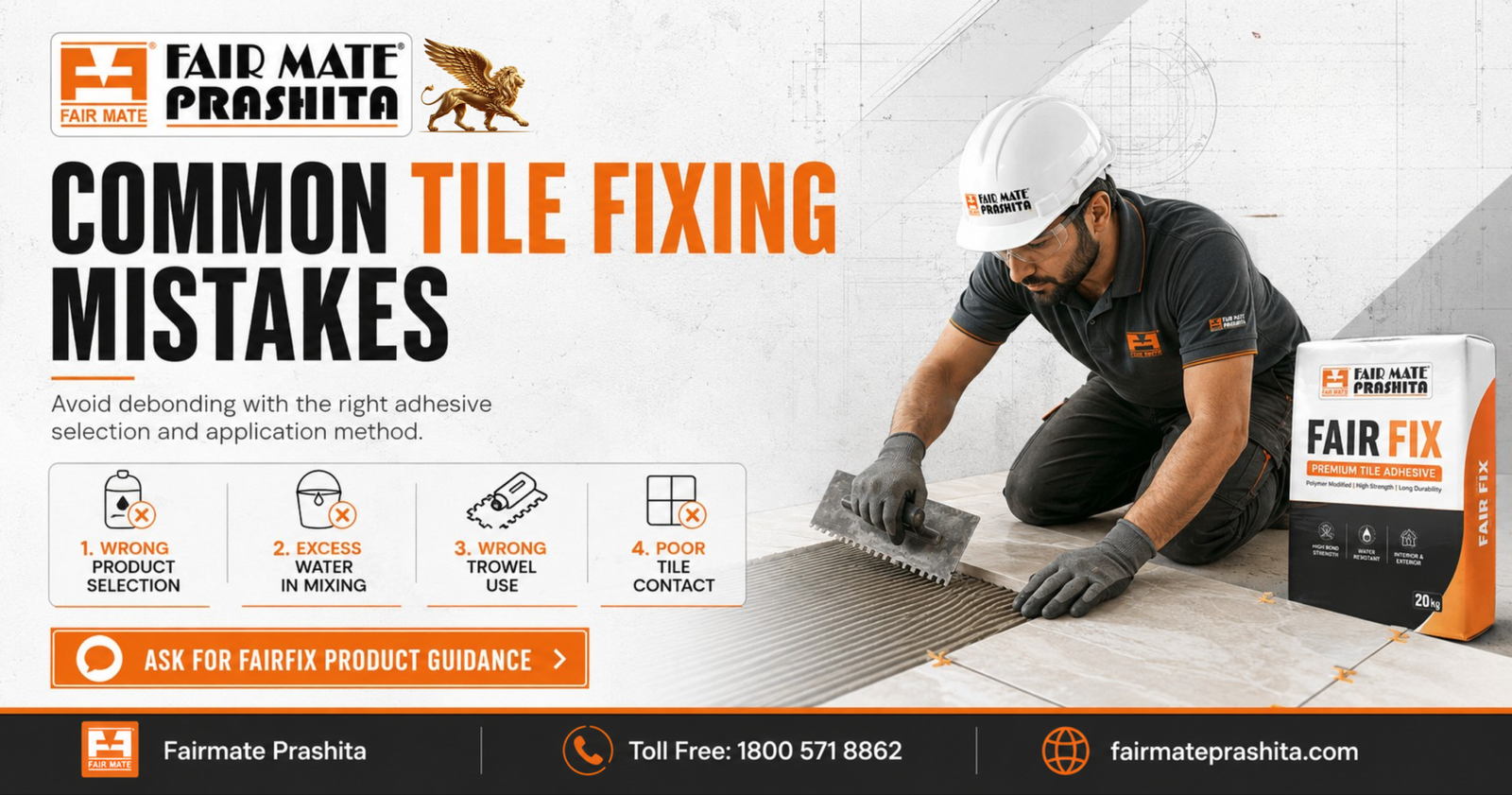
Avoid debonding with the right adhesive selection and application method. FairFix Tile Adhesive Solutions Fairmate Prashita | 1800 571 8862

Common Tile Fixing Mistakes That Cause Debonding and How to Avoid Them

Common tile Fixing Mistakes That Cause Debonding and How to Avoid Them

Tile debonding is one of the most common complaints in tile installation work. A tile may look properly fixed on the first day, but after some time, problems such as hollow sound, loose tiles, cracked joints, water seepage, uneven levels or complete tile failure may appear.

In many cases, the problem is not only with the tile. The real reason is often poor surface preparation, wrong adhesive selection, incorrect mixing, improper bedding or careless application technique.

For contractors, applicators, builders and dealers, understanding these mistakes is important because tile fixing quality directly affects project finish, customer satisfaction and long-term site performance.

Fairmate Prashita’s FairFix tile adhesive and mortar solutions are designed to support better bonding, cleaner application and more controlled site work when used with the right application method.

Why Tile Debonding Happens

Tile debonding means the tile loses proper bond with the surface below it. This can happen on floors, walls, bathrooms, kitchens, balconies, commercial spaces and renovation projects.

Common signs of tile debonding include:

  • Hollow sound when tapping tiles
  • Loose or lifted tiles
  • Cracked grout joints
  • Tile edges opening
  • Water entering below the tile
  • Uneven tile level
  • Repeated repair complaints

Debonding usually happens when the adhesive layer does not create strong contact between the tile and the substrate. This can happen due to product selection mistakes or application mistakes.

Mistake 1: Poor Surface Preparation

Surface preparation is one of the most important steps in tile fixing. If the surface is dusty, oily, weak, uneven or loose, the adhesive will not bond properly.

Many applicators start tile fixing without checking whether the surface is clean and sound. This can reduce bonding strength and create future tile failure.

How to Avoid It

Before applying tile adhesive:

  • Remove dust and loose particles
  • Clean oil, grease or paint contamination
  • Repair weak or damaged areas
  • Check surface level
  • Ensure the substrate is strong and stable
  • Avoid applying adhesive on loose plaster or weak screed

A clean and strong surface gives the tile adhesive better contact and improves bonding performance.

Mistake 2: Using Cement Mortar for Every Tile Application

Traditional cement-sand mortar is still used on many sites, but modern tiles and modern construction requirements need better bonding control. Cement mortar quality depends on site mixing, sand quality, water addition and workmanship. These factors can vary from site to site.

For vitrified tiles, large tiles, wet areas, renovation work or commercial projects, relying only on conventional mortar may not give the desired performance.

How to Avoid It

Use the right tile adhesive system based on tile type, tile size and application area. FairFix tile adhesive solutions from Fairmate Prashita support better bonding control, cleaner application and more consistent site performance compared to uncontrolled site mixing.

For routine tile fixing, FairFix TA STD can be considered as a practical tile adhesive solution. For higher-performance requirements, upgraded FairFix adhesive options may be recommended after technical guidance.

Mistake 3: Adding Too Much Water During Mixing

Excess water is a common mistake during tile adhesive preparation. Applicators sometimes add extra water to make the paste more workable. However, too much water can weaken the adhesive mix and affect bonding performance.

A watery mix may look easy to apply, but it can reduce strength, increase shrinkage and create poor tile contact.

How to Avoid It

Always follow the recommended water ratio given in the product technical data sheet. Add powder slowly into clean water and mix until a smooth, lump-free paste is formed.

Avoid:

  • Adding water again and again
  • Making the mix too thin
  • Using dirty water
  • Mixing without proper consistency
  • Using material after its workable time

Correct mixing supports better adhesive performance and easier application.

Mistake 4: Not Using a Notched Trowel

Using a flat trowel only or applying adhesive unevenly can create poor bedding below the tile. Without proper ridges, the tile may not get full contact with the adhesive bed.

This can lead to hollow sound, weak bonding and future debonding.

How to Avoid It

Use a suitable notched trowel based on tile size and surface condition. First spread the adhesive with the flat side of the trowel, then comb it using the notched side.

This helps create uniform adhesive ridges and improves tile contact when the tile is pressed properly.

Mistake 5: Spreading Too Much Adhesive at Once

Tile adhesive has an open time. If adhesive is spread over a large area and tiles are not placed quickly, the surface of the adhesive may start drying. Once this happens, bonding performance can reduce.

This mistake is common on large floor areas where applicators try to cover more area quickly.

How to Avoid It

Apply adhesive only on the area that can be tiled within the recommended open time. Avoid spreading adhesive too far ahead of tile placement.

Work in smaller sections and keep checking adhesive freshness before placing tiles.

Mistake 6: Poor Tile Contact

After placing the tile, it must be pressed properly into the adhesive bed. If the tile is only placed lightly without proper pressure and movement, full contact may not happen.

Poor contact creates empty areas below the tile. These areas can later cause hollow sound or tile breakage under load.

How to Avoid It

After placing the tile:

  • Press it firmly
  • Move slightly to ensure contact
  • Use spacers for uniform joints
  • Check tile level
  • Lift one tile occasionally to confirm adhesive coverage
  • Avoid leaving voids below the tile

Proper tile contact is critical for strong bonding and long-term performance.

Mistake 7: Ignoring Tile Type and Tile Size

Every tile is not the same. Ceramic tiles, vitrified tiles, large-format tiles, glass mosaics and stone tiles can have different bonding requirements.

Using the same adhesive or same method for every tile type can create performance issues.

How to Avoid It

Before starting tile work, check:

  • Tile size
  • Tile weight
  • Tile back surface
  • Water absorption
  • Application area
  • Interior or exterior exposure
  • Floor or wall use
  • Wet or dry area

Select the FairFix tile adhesive grade based on the actual site requirement. For routine work, FairFix TA STD may be suitable. For more demanding applications, ask for technical guidance before product selection.

Mistake 8: Applying on Uneven Surface

If the substrate is uneven, applicators may try to correct the level using extra adhesive thickness. This can create uneven drying, poor bedding and weak performance.

Tile adhesive should not be used as a replacement for proper surface levelling unless the product recommendation allows it.

How to Avoid It

Correct major surface unevenness before tile fixing. Ensure the substrate is properly levelled, cured and prepared before applying adhesive.

A level surface improves adhesive coverage, tile alignment and finish quality.

Mistake 9: Early Grouting or Early Loading

Grouting too early or allowing foot traffic before the adhesive has set properly can disturb the tile bond. This can cause movement, joint cracks or weak bonding.

How to Avoid It

Allow proper setting time before grouting or loading the tiled area. Follow the product recommendation for setting time and grouting time.

Avoid rushing the process, especially in areas where performance and finish are important.

Mistake 10: Not Taking Product Guidance

Many site problems happen because the same product is used for all applications without technical checking. For example, bathroom tiles, swimming pool tiles, external cladding, tile-on-tile work and heavy traffic areas may need different adhesive performance.

How to Avoid It

Before selecting tile adhesive, contractors and dealers should take product guidance based on tile type, surface and application area.

Fairmate Prashita provides technical support to help select the right FairFix solution for site requirements.

How FairFix Tile Adhesive Solutions Help

FairFix tile adhesive and mortar products are designed to support practical site performance for contractors, applicators and builders.

FairFix solutions can help with:

  • Better tile bonding support
  • Cleaner site application
  • Prepacked product consistency
  • Easy mixing and application
  • Reduced dependence on uncontrolled site mixing
  • Contractor-friendly use
  • Product selection support for different applications

For everyday tile fixing, FairFix TA STD can be positioned as a practical adhesive option. FairFix Mortar can support routine tile fixing and mortar work. For demanding applications, higher-grade FairFix solutions can be recommended after technical evaluation.

Basic Correct Tile Adhesive Application Method

For better bonding, follow these basic steps:

  1. Clean the surface properly.
  2. Remove dust, oil, grease and loose material.
  3. Check whether the surface is level and strong.
  4. Mix FairFix tile adhesive with clean water as recommended.
  5. Avoid adding excess water.
  6. Use a notched trowel for adhesive application.
  7. Apply adhesive only within workable area.
  8. Press tiles properly into the adhesive bed.
  9. Use spacers and check level.
  10. Clean excess adhesive before hardening.
  11. Allow proper setting before grouting or loading.

Correct product selection and correct application both are necessary for durable tile fixing.

Conclusion

Tile debonding is not a small issue. It can lead to repair cost, customer complaints, site delays and loss of trust. Most debonding problems can be reduced by avoiding common tile fixing mistakes and using the right adhesive system.

Contractors should not depend only on traditional methods for every tile application. Modern tile fixing needs better surface preparation, correct mixing, proper bedding and suitable tile adhesive selection.

FairFix tile adhesive and mortar products from Fairmate Prashita help contractors, applicators, builders and dealers choose a more controlled and reliable solution for tile bonding work.

Need help selecting the right FairFix product for your site?

Call Fairmate Prashita for product guidance: 1800 571 8862
Visit: www.fairmateprashita.com
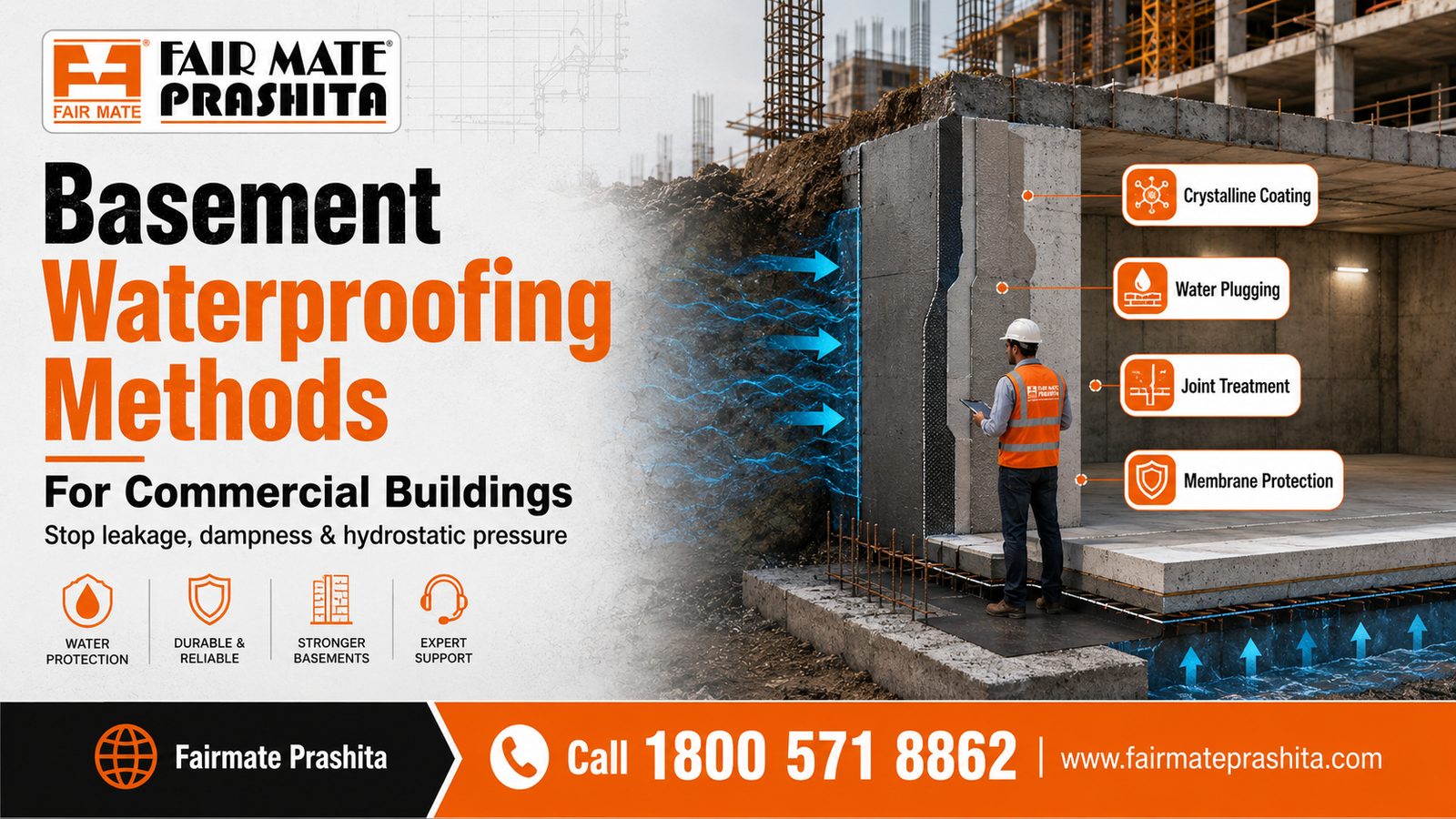
6 Basement Waterproofing Methods for Commercial Buildings

Basement Waterproofing Methods for Commercial Buildings

6 Basement Waterproofing Methods for Commercial Buildings

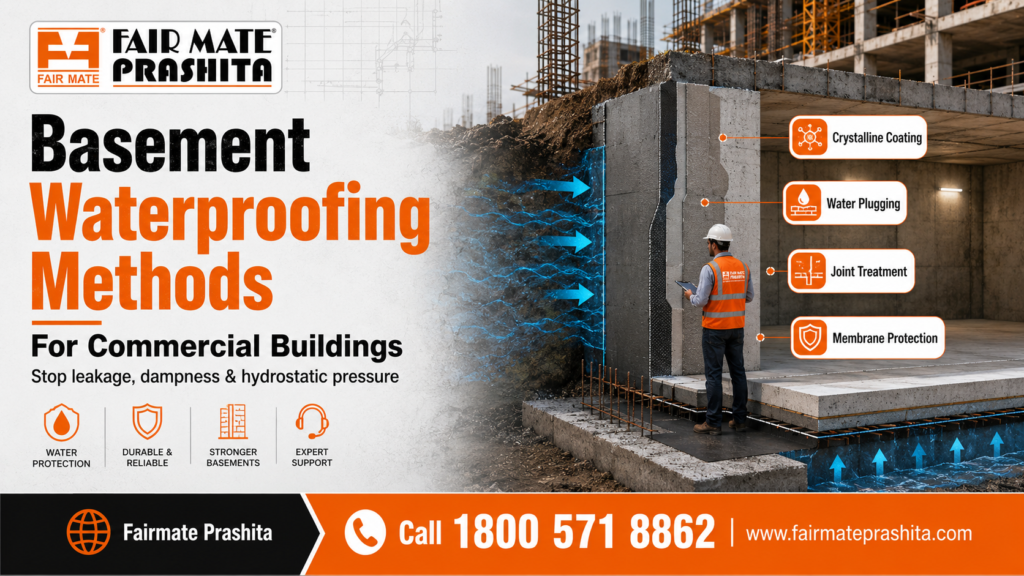
Basement waterproofing is one of the most important protection systems in commercial construction. In malls, hotels, hospitals, office buildings, factories, parking structures, warehouses and institutional projects, basements are exposed to constant moisture pressure from the surrounding soil. If waterproofing is not planned properly, water seepage, damp patches, concrete deterioration, corrosion of reinforcement, flooring failure, mould growth and long-term structural damage can occur.
For commercial buildings, basement waterproofing should not be treated as a cosmetic repair. It is a technical system that must be selected based on soil condition, water table, hydrostatic pressure, construction joints, concrete quality, retaining wall design and site exposure. A successful basement waterproofing method combines good concrete, proper joint treatment, surface preparation, leakage plugging and the correct waterproofing coating or membrane system.
Fairmate Prashita offers advanced waterproofing systems under the WATERGUARD range for basements, water tanks, retaining walls and other critical areas. These systems are designed to support builders, contractors, engineers, applicators and project consultants with practical product selection and technical guidance.

Why Basement Waterproofing Matters in Commercial Buildings

Commercial basements often serve high-value functions. They may be used for parking, electrical rooms, storage, HVAC systems, service areas, utility rooms or commercial back-end operations. Even small leakage can lead to major maintenance issues. Dampness can damage paint, plaster, flooring, electrical installations and stored materials. In severe cases, water ingress can affect concrete durability and reinforcement protection.
Basements face a different challenge compared to terraces or external walls. Water pressure does not only come from rainfall; it also comes from the surrounding ground. When groundwater pushes against the basement wall or raft slab, it creates hydrostatic pressure. This pressure can force water through cracks, honeycombs, construction joints, pipe penetrations and weak concrete areas. That is why basement waterproofing requires a system-based approach rather than a single coating.

1.Crystalline Waterproofing Method

Crystalline waterproofing is one of the most effective methods for basement concrete because it works within the concrete matrix. The material reacts with moisture and cementitious compounds to form crystals inside pores and capillaries. These crystals help block water movement through the concrete.

For basements exposed to water pressure, crystalline waterproofing is useful because it becomes part of the concrete surface and provides internal protection. It is commonly used on raft slabs, retaining walls, water tanks, lift pits and below-ground structures.

Fairmate Prashita’s WATERGUARD CRYSTALLINE is described as an easily brush-applied cementitious crystalline waterproofing coating. It is designed for well-prepared sound substrates and is applied for water tanks and basements where hydrostatic pressure exists. (Fairmate Prashita)

Best suited for:
Basement retaining walls, raft slabs, lift pits, water tanks, underground structures and concrete surfaces exposed to hydrostatic pressure.

2. Cementitious Waterproofing Coating

Cementitious waterproofing is widely used in commercial basements because it bonds well with concrete and masonry surfaces. It is practical, site-friendly and suitable for internal waterproofing where surfaces are prepared properly. Polymer-modified cementitious systems offer better flexibility, adhesion and durability compared to normal cement-based coatings.

This method is useful for basement walls, internal wet areas, retaining walls, tanks and service zones. It can be applied by brush, roller or trowel, depending on the product type.

Fairmate Prashita’s WATERGUARD A is a two-component acrylic cementitious waterproofing coating. It is described as a brush-applied polymer-modified cementitious waterproof coating that forms a tough, durable, abrasion-resistant and flexible waterproof layer with excellent adhesion. (Fairmate Prashita)

For higher performance needs, WATERGUARD A SUPER is a polymer-modified flexible cementitious waterproof coating. It is suitable for well-prepared substrates and can provide tough, durable waterproof rendering at 2–3 mm thickness for water tanks and basements. (Fairmate Prashita)

Best suited for:
Commercial basement walls, water tanks, retaining walls, internal concrete surfaces, utility rooms and service areas.

3. Fibre-Reinforced Waterproof Render

In basement areas where hydrostatic pressure is high, a simple coating may not always be enough. A thicker, fibre-reinforced waterproof render can provide additional protection. This method is especially helpful where the surface needs a more robust waterproof layer.

Fairmate Prashita’s WATERGUARD T is a trowel-applied, single-pack, fibre-reinforced waterproof cementitious render. It is described for water tanks and basements where hydrostatic pressure exists and is normally used in conjunction with WATERGUARD A as a primer. (Fairmate Prashita)

This type of waterproofing method is useful when the basement structure needs a stronger surface layer against water pressure and site wear. Proper surface cleaning, crack treatment and curing are important for performance.

Best suited for:
Basements with hydrostatic pressure, water-retaining structures, lift pits, retaining walls and heavy-duty below-ground concrete areas.

4. Water Plugging for Active Leakage

Before applying any coating or membrane, active leakage must be stopped. If running water is present through cracks, honeycombs, pipe penetrations or construction joints, coating directly over the leak will not solve the problem. The first step is to plug the leakage source.

Fairmate Prashita’s FAIRMATE WATERPLUG (S) is a fast-setting hydraulic compound that stops running water instantly. It sets in approximately 1 to 3 minutes depending on temperature and site conditions. (Fairmate Prashita)

Water plugging is especially important during basement repair projects where leakage is already visible. After plugging, the surface can be prepared for the correct waterproofing system.

Best suited for:
Active water seepage, running water points, cracks, tie-rod holes, honeycombs, basement wall leaks and emergency leakage repair.

5. PVC Water Stop for Construction Joints

Many basement leakages happen at joints, not through the main concrete body. Construction joints, contraction joints and expansion joints are weak points if not treated correctly. During new construction, PVC water stops are installed inside or outside the concrete joint to prevent water passage.

Fairmate Prashita’s WATERGUARD PVC WATER STOP is designed to stop possible leakage from construction, contraction and expansion joints in concrete elements. It is used for internal and external fixing and is resistant to abrasion and chemicals. (Fairmate Prashita)

For commercial basements, PVC water stops are important in raft-wall junctions, retaining wall joints, podium basement joints, water tanks, underground parking structures and expansion joint areas.

Best suited for:
New basement construction, raft-wall joints, retaining wall joints, expansion joints, water tanks and underground concrete structures.

6. Membrane Waterproofing Systems

For external basement waterproofing, membrane systems are often used on the positive side before backfilling. Membranes create a continuous barrier between the soil and the concrete surface. Depending on project requirements, membrane systems may include APP, SBS, TPO, EPDM, PU, polyurea or liquid-applied membranes.

Fairmate Prashita’s WATERGUARD range includes waterproofing membranes such as APP, SBS, TPO and EPDM options, along with PU, epoxy, acrylic modified coatings and liquid membranes. (Fairmate Prashita) These systems are suitable where the structure needs long-term protection from soil moisture and groundwater exposure.

For commercial projects, membrane selection depends on whether the waterproofing is being applied before backfilling, after concrete casting, on podium levels, or as part of a repair system.

Best suited for:
External basement walls, raft slabs, podiums, retaining walls, foundation areas and large commercial waterproofing projects.

Recommended Basement Waterproofing System Approach

A good basement waterproofing system should follow a proper sequence:

First, inspect the basement area and identify the source of water ingress. Second, repair cracks, honeycombs and weak concrete areas. Third, stop active leakage using a fast-setting plugging compound. Fourth, treat construction joints with the right water stop or joint system. Fifth, apply the selected waterproofing coating, render or membrane based on site exposure. Finally, protect the waterproofing layer before backfilling or finishing work.

The most common failure in basement waterproofing is not product failure but system failure. Poor surface preparation, incorrect product selection, inadequate curing, untreated joints and lack of supervision can reduce performance. That is why commercial projects should always involve technical consultation before finalizing the waterproofing method.

Final Thoughts

Basement waterproofing is a critical investment for commercial buildings. A well-designed waterproofing system protects the building from leakage, dampness, corrosion, maintenance cost and long-term structural deterioration. Whether the project requires crystalline waterproofing, cementitious coating, fibre-reinforced render, water plugging, PVC water stop or membrane waterproofing, the correct method must be selected based on site condition and water pressure.

Fairmate Prashita provides advanced construction chemical solutions for waterproofing, concrete repair, grouting, flooring, protective coatings and other building applications. For basement waterproofing product selection, application guidance or technical support, read the full guide and call 1800 571 8862.

Fairmate Prashita,
Advanced Construction Chemical Solutions
Corporate Office: 2nd Floor, Sarang House, Sheetal Nagar, Akota, Vadodara, Gujarat 390020.
📞 Toll Free: 1800 571 8862
🌐 Website: www.fairmateprashita.com
📧 Email: support@fairmateprashita.com

FAIRTOP & Industrial Flooring Solutions for High Traffic Areas

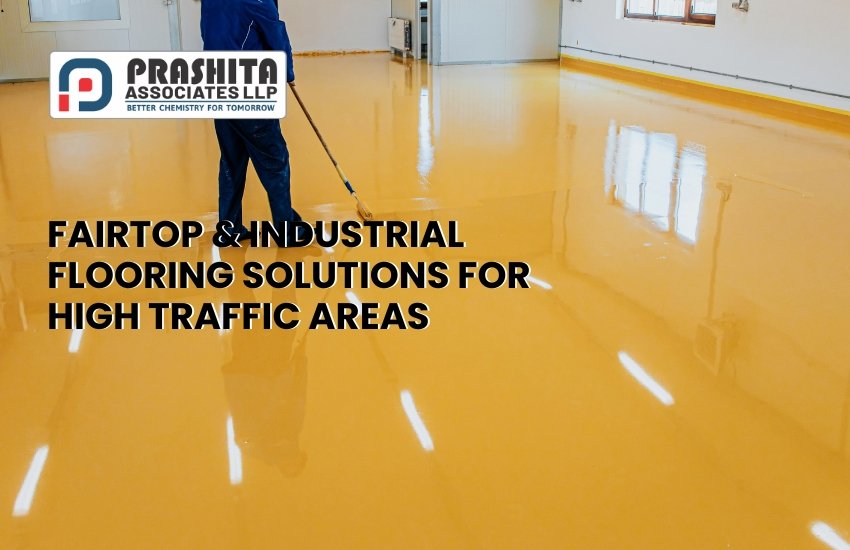
Floors in industrial and commercial spaces endure constant wear — from forklifts, trolley wheels, heavy machinery, and chemical spills. If the floor fails, operations suffer.

That’s why selecting the right industrial flooring system is critical to long-term functionality and safety. At Fairmate Prashita LLP, we provide high-performance flooring solutions through our FAIRTOP product range, tailored to meet the demands of heavy traffic and tough environments.

FAIRTOP is engineered using trusted material science, with formulation roots in Fairmate’s industrial coatings and screeds — refined over decades for strength and endurance.

Why FAIRTOP for Industrial Flooring?

The FAIRTOP flooring systems are:

  • Abrasion-resistant
  • Non-metallic and iron-free
  • Non-slip and anti-skid
  • High compressive strength (up to 800 kg/cm²)
  • Available in eco-safe, solvent-free variants

These floors are ideal for both new builds and refurbishment of manufacturing plants, logistics facilities, loading bays, and garages.

Product Highlights

FAIRTOP STD

A single-pack, non-metallic, smooth-finish, abrasion-resistant flooring compound. Designed for light to medium traffic areas like workshops, stores, and warehouses.

FAIRTOP

A carborundum-based monolithic surface hardener, ideal for medium to heavy-duty areas. It resists oil, water, and impact and is applied as a dry-shake on fresh concrete.

FAIRTOP FAST FLOOR

A self-smoothing, rapid-hardening cementitious screed, allowing foot traffic in just a few hours. Best suited for time-sensitive flooring refurnishments.

FAIRTOP METALLIC

A screedable, iron aggregate topping for ultra-heavy-duty use — often applied in industrial zones with constant impact and abrasion.

Where These Floors Work Best

Application AreaRecommended FAIRTOP Product
Manufacturing floorsFAIRTOP or FAIRTOP METALLIC
Warehouses & depotsFAIRTOP STD / FAST FLOOR
Loading docksFAIRTOP METALLIC
Service garagesFAIRTOP STD
Cold storage areasFAIRTOP FAST FLOOR (fast curing)

Features That Set FAIRTOP Apart

  • Dustproof Finish: Reduces airborne particles in clean or packaging areas
  • Anti-Skid Texture: Enhances workplace safety in wet or oily zones
  • High Hardness: Mho’s scale hardness up to 9 (FAIRTOP)
  • Color Options: Available in grey, red, green, and more for zoning or aesthetics
  • Low Maintenance: Longer service cycles between repairs

These flooring solutions are adapted for Indian site conditions and can be customized as per load requirements and finishing needs.

Built on Proven Chemistry

All FAIRTOP flooring systems offered by Prashita are based on proven formulation standards originally developed by Fairmate, ensuring consistency and compliance with ASTM, IS, and BS norms.

We adapt these technologies for your specific projects, supported by our in-house technical team — from specification to post-application support.

Services We Offer Alongside Products

  • On-site substrate assessment
  • Coverage estimation and mix guidance
  • Color and texture recommendations
  • Application supervision for contractors
  • Technical datasheets and warranty options

We work with applicators, architects, and EPC contractors to optimize industrial floor performance and lifespan.

Conclusion

Industrial floors do more than hold weight — they hold your operations together. With FAIRTOP flooring systems from Prashita Associates LLP, you get dependable surface strength, long-term value, and minimal downtime.Engineered using materials with a legacy of reliability from Fairmate’s industrial solutions, our products are tailored to meet your project’s unique wear and durability needs.


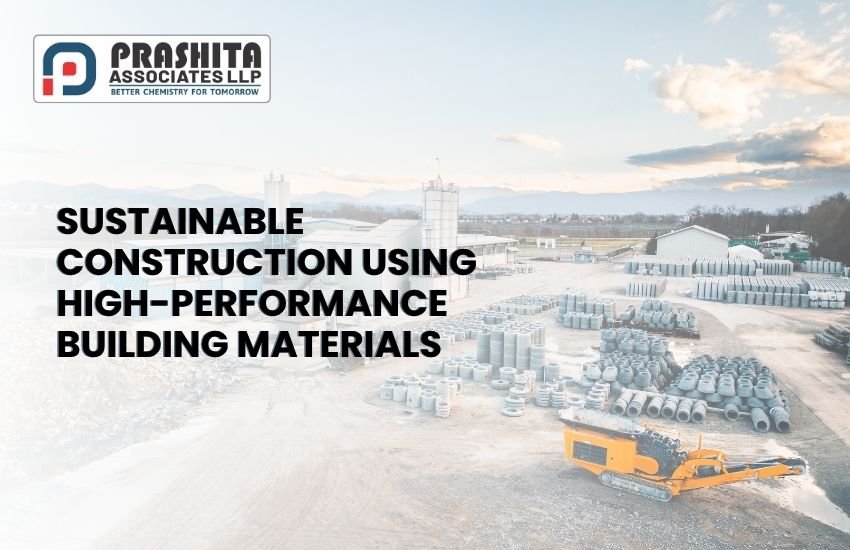
A wide-angle view of a modern construction material plant with stacks of concrete pipes, silos, and machinery. The foreground shows a bright orange industrial vehicle, while the background features a clear sky with light clouds and a distant mountain range. Overlaid text reads: "Sustainable Construction Using High-Performance Building Materials" with the Prashita Associates LLP logo in the top-left corner.

Sustainable Construction Using High-Performance Building Materials

Sustainability is no longer a trend — it’s a necessity. With increasing environmental regulations, rising material costs, and growing awareness of climate impact, the construction industry is undergoing a transformation.

At Fairmate Prashita LLP, we empower engineers, developers, and builders to make this shift with high-performance construction chemicals that reduce waste, enhance longevity, and support green building initiatives.

Why Sustainable Construction Matters

Traditional construction methods often lead to:

  • Excess material usage
  • High water consumption
  • Frequent maintenance and repairs
  • Shorter structure lifespans
  • High carbon emissions

Sustainable construction is about doing more with less — building smarter, stronger, and greener. And that starts with the materials you choose.

Two hands gently hold a futuristic digital representation of eco-friendly construction materials, including green bricks and plants growing from concrete blocks, symbolizing sustainability and innovation. The background is dark gray, with the overlaid text reading: "How Our Products Enable Greener Construction". Branding context: Prashita Associates LLP promotes sustainable construction solutions through advanced material science.

How Our Products Enable Greener Construction

Our building material solutions are designed with sustainability at their core. Here’s how:

1. Concrete Admixtures That Save Water and Cement

Fairmate Prashita’s range of water reducers, plasticizers, and superplasticizers enables:

  • Reduced water-cement ratios by up to 30%
  • Enhanced early and long-term strength
  • Lower cement consumption without compromising performance

By using less water and cement, these admixtures contribute to lower CO₂ emissions per cubic meter of concrete.

These are based on long-established product platforms known for their efficiency in green building certifications.

2. Waterproofing Systems That Extend Life Span

Waterproofing isn’t just about keeping water out — it’s about keeping structures intact for longer.

Our waterproofing range includes:

  • Crystalline coatings
  • Acrylic membranes
  • Bituminous membranes
  • Liquid-applied barriers

These systems:

  • Prevent corrosion of rebars
  • Minimize structural degradation
  • Eliminate the need for frequent repairs or reconstruction

Longer lifespan = lower material usage over time.

3. Flooring and Surface Hardeners That Resist Wear

In industrial and commercial environments, floor replacement is both expensive and environmentally taxing.

Our flooring systems like FAIRTOP and FAIRSCREED EP provide:

  • High abrasion resistance
  • Dustproof and chemical-resistant surfaces
  • Lower maintenance cycles
  • Less frequent renovation needs

Result: less material use, lower life-cycle cost, and longer intervals between replacements.

4. Sealants and Surface Treatments That Protect

Using the right joint sealants, curing compounds, and surface coatings can prevent moisture ingress, UV damage, and cracking — all of which contribute to early failure.

Prashita’s protective coatings and sealants:

  • Are non-toxic and VOC-compliant
  • Enhance thermal and chemical resistance
  • Improve building envelope durability

5. Smart Repair Solutions That Reduce Demolition

We also offer fast-setting repair mortars, injection grouts, and bonding agents that help restore aging structures without full-scale demolition.

This significantly reduces:

  • Debris generation
  • Material waste
  • Downtime on projects

Many of these products follow global benchmarks for eco-compliance and durability.

Certifications and Green Building Compliance

Our products contribute to:

  • IGBC & GRIHA credit points
  • LEED Green Building certifications
  • Sustainable infrastructure benchmarks
  • Reduced embodied energy and water footprint

They are ideal for projects with sustainability goals in residential, commercial, and public infrastructure segments.

Success in Practice: Sustainable Projects Delivered

Prashita has supported developers and civil engineers across India in green building projects, including:

  • Metro rail systems
  • Green-certified residential towers
  • Industrial plants with EHS mandates
  • Institutional buildings and campuses

Each solution is backed by formulations trusted for long-term performance and supported with our technical expertise.

Conclusion

Sustainable construction starts at the material level. With eco-conscious, performance-driven building materials, Prashita Associates LLP helps clients balance quality, cost-efficiency, and environmental responsibility.

By choosing advanced construction chemicals — you’re not just building for today, you’re building for generations.

Partner With Prashita for Greener Projects

📩 Email: support@fairmateprashita.com
🌐 Website:www.fairmateprashita.com
📞 Let’s design your next sustainable site together.


FAIRMATE MICROCRETE – INNOVATIVE FLOORING & WALL FINISHING

DESCRIPTION

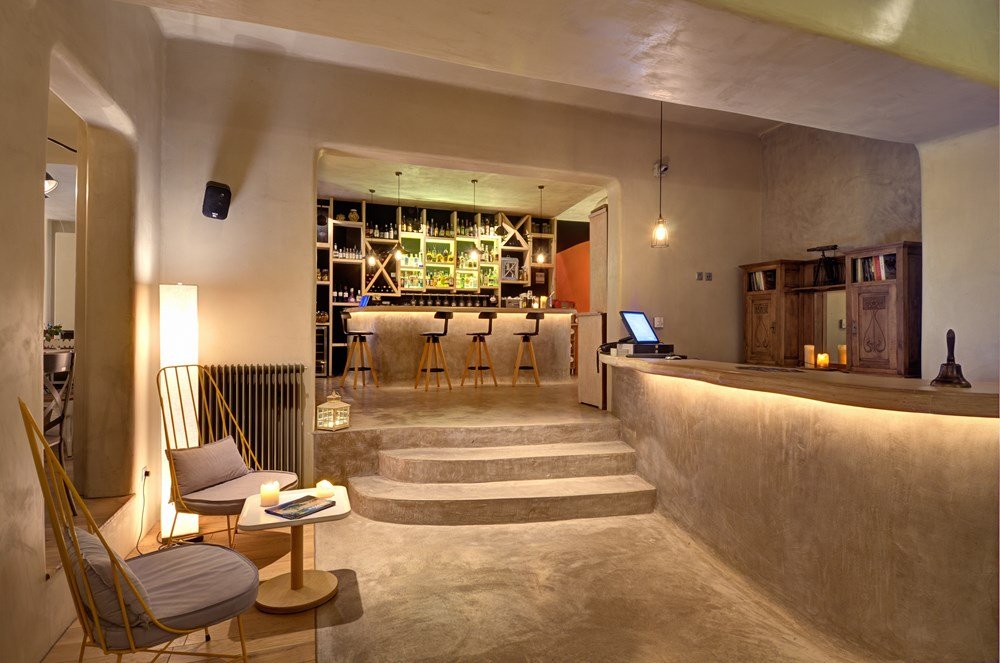
FAIRMATE MICROCRETE is a Unique new age decorative product which suitable for application on Floors, Walls & even on ceilings. The Uniqueness of this product is that it can even be applied to create uniform surfaces with minimum possible number of joints. With the increase of the renovation market this product can be applied directly on existing coverings such as Ceramic Tiles, Mosaic Floors, Wood, Metal, Dry boards & Glass. FAIRMATE MICROCRETE is the product which is available in different color combinations & patterns. The surface finished with FAIRMATE MICROCRETE provides unique architectural look whether it has been applied in Living Room, bathroom, office or kitchen, industrial floor, furniture, external façade. FAIRMATE MICROCRETE can be easily applied upon existing coverings, such as ceramic tiles without removing them, allow us to quickly and easily change the look and shape of our space with low cost and in a short period of time.

USES

FAIRMATE MICROCRETE can be applied as per below described surfaces:

• On internal floors and walls,bathrooms on cement based substrate on floors and gypsum boards on walls.
• On external floors and walls, staircases and external whirlpools.
• On Internal floors and staircases over existing ceramic tile floors.
• On Internal floors and walls over existing ceramic tiles.
• On floors, walls and staircase inside swimming pools.
• Suitable on marble and porcelain sink, office, flower. pot, office, kitchen bench, heating panel and office
produced of cement board.

BENEFITS

• Small application Height.
• High Tensile & compressive strength.
• Available in Variety of Colors & Patterns.
• Can also be applied on existing coverings such as Ceramic Tiles, Wood, Dry Board, Naval Board, Glass etc.
• Available in Variety of Varnish coat finishes.
• Ease of application.
• Excellent bonding on variety of substrates.
• Suitable for application on Floors, Walls & Ceilings.

VISIT: http://www.fairmate.com/