

Avoid debonding with the right adhesive selection and application method. FairFix Tile Adhesive Solutions Fairmate Prashita | 1800 571 8862

Common Tile Fixing Mistakes That Cause Debonding and How to Avoid Them

Common tile Fixing Mistakes That Cause Debonding and How to Avoid Them

Tile debonding is one of the most common complaints in tile installation work. A tile may look properly fixed on the first day, but after some time, problems such as hollow sound, loose tiles, cracked joints, water seepage, uneven levels or complete tile failure may appear.

In many cases, the problem is not only with the tile. The real reason is often poor surface preparation, wrong adhesive selection, incorrect mixing, improper bedding or careless application technique.

For contractors, applicators, builders and dealers, understanding these mistakes is important because tile fixing quality directly affects project finish, customer satisfaction and long-term site performance.

Fairmate Prashita’s FairFix tile adhesive and mortar solutions are designed to support better bonding, cleaner application and more controlled site work when used with the right application method.

Why Tile Debonding Happens

Tile debonding means the tile loses proper bond with the surface below it. This can happen on floors, walls, bathrooms, kitchens, balconies, commercial spaces and renovation projects.

Common signs of tile debonding include:

  • Hollow sound when tapping tiles
  • Loose or lifted tiles
  • Cracked grout joints
  • Tile edges opening
  • Water entering below the tile
  • Uneven tile level
  • Repeated repair complaints

Debonding usually happens when the adhesive layer does not create strong contact between the tile and the substrate. This can happen due to product selection mistakes or application mistakes.

Mistake 1: Poor Surface Preparation

Surface preparation is one of the most important steps in tile fixing. If the surface is dusty, oily, weak, uneven or loose, the adhesive will not bond properly.

Many applicators start tile fixing without checking whether the surface is clean and sound. This can reduce bonding strength and create future tile failure.

How to Avoid It

Before applying tile adhesive:

  • Remove dust and loose particles
  • Clean oil, grease or paint contamination
  • Repair weak or damaged areas
  • Check surface level
  • Ensure the substrate is strong and stable
  • Avoid applying adhesive on loose plaster or weak screed

A clean and strong surface gives the tile adhesive better contact and improves bonding performance.

Mistake 2: Using Cement Mortar for Every Tile Application

Traditional cement-sand mortar is still used on many sites, but modern tiles and modern construction requirements need better bonding control. Cement mortar quality depends on site mixing, sand quality, water addition and workmanship. These factors can vary from site to site.

For vitrified tiles, large tiles, wet areas, renovation work or commercial projects, relying only on conventional mortar may not give the desired performance.

How to Avoid It

Use the right tile adhesive system based on tile type, tile size and application area. FairFix tile adhesive solutions from Fairmate Prashita support better bonding control, cleaner application and more consistent site performance compared to uncontrolled site mixing.

For routine tile fixing, FairFix TA STD can be considered as a practical tile adhesive solution. For higher-performance requirements, upgraded FairFix adhesive options may be recommended after technical guidance.

Mistake 3: Adding Too Much Water During Mixing

Excess water is a common mistake during tile adhesive preparation. Applicators sometimes add extra water to make the paste more workable. However, too much water can weaken the adhesive mix and affect bonding performance.

A watery mix may look easy to apply, but it can reduce strength, increase shrinkage and create poor tile contact.

How to Avoid It

Always follow the recommended water ratio given in the product technical data sheet. Add powder slowly into clean water and mix until a smooth, lump-free paste is formed.

Avoid:

  • Adding water again and again
  • Making the mix too thin
  • Using dirty water
  • Mixing without proper consistency
  • Using material after its workable time

Correct mixing supports better adhesive performance and easier application.

Mistake 4: Not Using a Notched Trowel

Using a flat trowel only or applying adhesive unevenly can create poor bedding below the tile. Without proper ridges, the tile may not get full contact with the adhesive bed.

This can lead to hollow sound, weak bonding and future debonding.

How to Avoid It

Use a suitable notched trowel based on tile size and surface condition. First spread the adhesive with the flat side of the trowel, then comb it using the notched side.

This helps create uniform adhesive ridges and improves tile contact when the tile is pressed properly.

Mistake 5: Spreading Too Much Adhesive at Once

Tile adhesive has an open time. If adhesive is spread over a large area and tiles are not placed quickly, the surface of the adhesive may start drying. Once this happens, bonding performance can reduce.

This mistake is common on large floor areas where applicators try to cover more area quickly.

How to Avoid It

Apply adhesive only on the area that can be tiled within the recommended open time. Avoid spreading adhesive too far ahead of tile placement.

Work in smaller sections and keep checking adhesive freshness before placing tiles.

Mistake 6: Poor Tile Contact

After placing the tile, it must be pressed properly into the adhesive bed. If the tile is only placed lightly without proper pressure and movement, full contact may not happen.

Poor contact creates empty areas below the tile. These areas can later cause hollow sound or tile breakage under load.

How to Avoid It

After placing the tile:

  • Press it firmly
  • Move slightly to ensure contact
  • Use spacers for uniform joints
  • Check tile level
  • Lift one tile occasionally to confirm adhesive coverage
  • Avoid leaving voids below the tile

Proper tile contact is critical for strong bonding and long-term performance.

Mistake 7: Ignoring Tile Type and Tile Size

Every tile is not the same. Ceramic tiles, vitrified tiles, large-format tiles, glass mosaics and stone tiles can have different bonding requirements.

Using the same adhesive or same method for every tile type can create performance issues.

How to Avoid It

Before starting tile work, check:

  • Tile size
  • Tile weight
  • Tile back surface
  • Water absorption
  • Application area
  • Interior or exterior exposure
  • Floor or wall use
  • Wet or dry area

Select the FairFix tile adhesive grade based on the actual site requirement. For routine work, FairFix TA STD may be suitable. For more demanding applications, ask for technical guidance before product selection.

Mistake 8: Applying on Uneven Surface

If the substrate is uneven, applicators may try to correct the level using extra adhesive thickness. This can create uneven drying, poor bedding and weak performance.

Tile adhesive should not be used as a replacement for proper surface levelling unless the product recommendation allows it.

How to Avoid It

Correct major surface unevenness before tile fixing. Ensure the substrate is properly levelled, cured and prepared before applying adhesive.

A level surface improves adhesive coverage, tile alignment and finish quality.

Mistake 9: Early Grouting or Early Loading

Grouting too early or allowing foot traffic before the adhesive has set properly can disturb the tile bond. This can cause movement, joint cracks or weak bonding.

How to Avoid It

Allow proper setting time before grouting or loading the tiled area. Follow the product recommendation for setting time and grouting time.

Avoid rushing the process, especially in areas where performance and finish are important.

Mistake 10: Not Taking Product Guidance

Many site problems happen because the same product is used for all applications without technical checking. For example, bathroom tiles, swimming pool tiles, external cladding, tile-on-tile work and heavy traffic areas may need different adhesive performance.

How to Avoid It

Before selecting tile adhesive, contractors and dealers should take product guidance based on tile type, surface and application area.

Fairmate Prashita provides technical support to help select the right FairFix solution for site requirements.

How FairFix Tile Adhesive Solutions Help

FairFix tile adhesive and mortar products are designed to support practical site performance for contractors, applicators and builders.

FairFix solutions can help with:

  • Better tile bonding support
  • Cleaner site application
  • Prepacked product consistency
  • Easy mixing and application
  • Reduced dependence on uncontrolled site mixing
  • Contractor-friendly use
  • Product selection support for different applications

For everyday tile fixing, FairFix TA STD can be positioned as a practical adhesive option. FairFix Mortar can support routine tile fixing and mortar work. For demanding applications, higher-grade FairFix solutions can be recommended after technical evaluation.

Basic Correct Tile Adhesive Application Method

For better bonding, follow these basic steps:

  1. Clean the surface properly.
  2. Remove dust, oil, grease and loose material.
  3. Check whether the surface is level and strong.
  4. Mix FairFix tile adhesive with clean water as recommended.
  5. Avoid adding excess water.
  6. Use a notched trowel for adhesive application.
  7. Apply adhesive only within workable area.
  8. Press tiles properly into the adhesive bed.
  9. Use spacers and check level.
  10. Clean excess adhesive before hardening.
  11. Allow proper setting before grouting or loading.

Correct product selection and correct application both are necessary for durable tile fixing.

Conclusion

Tile debonding is not a small issue. It can lead to repair cost, customer complaints, site delays and loss of trust. Most debonding problems can be reduced by avoiding common tile fixing mistakes and using the right adhesive system.

Contractors should not depend only on traditional methods for every tile application. Modern tile fixing needs better surface preparation, correct mixing, proper bedding and suitable tile adhesive selection.

FairFix tile adhesive and mortar products from Fairmate Prashita help contractors, applicators, builders and dealers choose a more controlled and reliable solution for tile bonding work.

Need help selecting the right FairFix product for your site?

Call Fairmate Prashita for product guidance: 1800 571 8862
Visit: www.fairmateprashita.com

SETRELEASE ECO

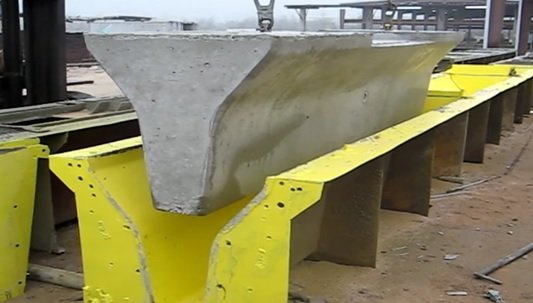
A mould release agent is a chemical substance that creates a moulding surface barrier so that products don’t get stuck to a mould. We are well aware of the need to use mould release agent for concrete and formwork, as it is very crucial to prevent the concrete from sticking to the surface of the mould.
When a proper mould release agent is not used it has been observed that it becomes difficult to remove the mould and even the finish of the concrete is not aesthetically pleasing. To achieve easy removal of mould and a good smooth finish of the concrete surface it is advisable to use an excellent performing mould release agent.
Our SETRELEASE ECO is a wonderful product in itself, it is an eco friendly, biodegradable oil based mould release agent. It has no impact on the mould besides allowing it to detach from the concrete leaving a smooth finish.
It is a specially formulated blend of bio degradable oil based mould release agent, which is superior then conventional mould oil. The chemicals react with the alkali in the concrete to form a thin water repellent skin on the surface of the mould, thereby enabling easy stripping from concrete and protects steel and wooden formwork. SETRELEASE ECO is supplied as ready to use liquid.
Due to the excellent release properties, little or no deposit of cement paste remains on the shutter surface. Minimum cleaning & a further coat of SETRELEASE ECO renders shuttering ready for re-use.
SETRELEASE ECO provides quick, clean and easy stripping of moulds and formwork. It ensures high quality, fair-faced and stain-free concrete surface. Protects aluminium windows and door frames from plaster and mortar splashes.

SALIENT FEATURES:
• ECO friendly
• Ensures good fair-faced concrete
• Can be used on all type of formwork
• Non-staining
• Minimises cleaning of shutters before reuse
• Can be used with steam curing
• Reduces the incidence of air pocket and tendency of surface spalli ng of corners
• Economical

*Applicable on all types of formwork*

APPLICATION:
SETRELEASE ECO can be applied by brush, sponge or conventional mould oil-sprayer. If an oil sprayer is used, care should be taken to choose correct size of
sprayer. Apply one thin and even coat of SETRELEASE ECO over the entire surface. Even a thin coat is enough to achieve effective coverage.
Excess application is uneconomical and may lead to surface dusting. Wire or brush off any excess particles on the surface and apply one coat of SETRELEASE ECO as before. To remove SETRELEASE ECO completely, for recoating mould or shutter surface, use strong industrial detergent together with stiff brushing & then thoroughly rinse with clean water. It is recommended that after application of SETRELEASE ECO concrete pouring to be done within 24 hrs or same day.

COVERAGE:
A coverage between 40 to 60 m²/litre is possible depending upon the porosity and texture of mould surface.

FAIRCURE WX WHITE

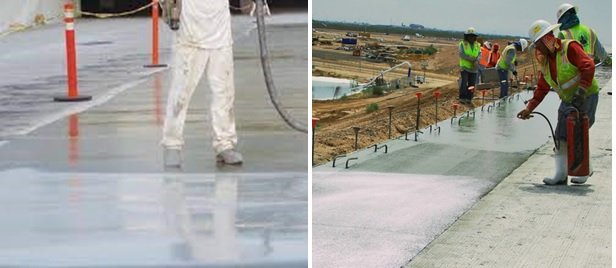
FAIRCURE WX WHITE is a wax based concrete curing compound. It is white coloured curing compound. When it is applied on the concrete surface, it forms a continuous layer of wax over it. The wax layer remains on the surface of concrete, but do not penetrate into surface. It only breaks by natural weathering or anyone remove it by scratching. FAIRCURE WX WHITE is useful where curing cannot be done by water ponding like on vertical or inclined surface.

FAIRCURE WX WHITE can be used on fresh concrete surface and newly exposed concrete surfaces after removal of formwork. It can be used for pavement, runway, bridge deck, towers, chimneys, canal lining, columns and beams.

Benefits of wax based concrete curing compound:

There are various benefits of wax based concrete curing compounds. Some of them are given below:

• By obtaining superior strength, it helps in completing the hydration of the cement.
• It also provides a water repellent film.
• The biggest advantage of this compound is that it can be used with all types of cement.
• As it reduces the breaking of the edges while lifting the elements, therefore, it helps in saving the cost of production.

SALIENT FEATURES of FAIRCURE WX WHITE
• Only single coat required for whole of the curing period
• Reduce water usage
• Ensures perfect curing
• Ensures hard wearing surface
• Easy to use and apply
• Reduce labour cost
• Time saver
• Easy to identify treated surface

APPLICATION PROCEDURE
• Stir well the liquid curing compound before applying.
• Fill the stirred liquid in the high volume low pressure spray.
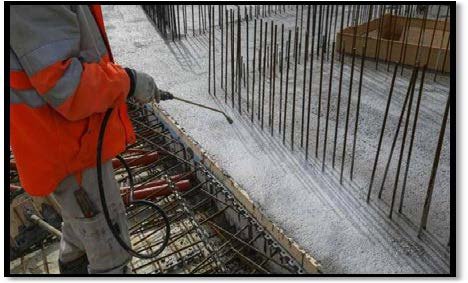
• Start applying uniform coat of FAIRCURE WX WHITE and keep nozzle of spray 40-50cm from concrete surface. Move the nozzle back and forth to ensure complete and even coverage. The pump pressure should be maintained at a level to produce a fine spray.
• For newly placed concrete, apply FAIRCURE WX WHITE as soon as visible surface moisture is invisible, e.g. typically 1/2 to 2 hours after placing shuttered and precast concrete.
• For demoulded concrete surface, apply FAIRCURE WX WHITE immediately after removing mould/ formwork.

PACKING AND COVERAGE
FAIRCURE WX WHITE is supplied in 1, 5, 10, 50, 100, 200 Ltr. carboys. FAIRCURE WX WHITE has coverage of 5 to 6 m² per Ltr.

FAIRCURE WC – WHITE PIGMENTED CONCRETE CURING AID

Buildings have major environmental impacts over their entire life cycle. Resources such as ground cover, forests, water, and energy are depleted to give way to buildings. A green building depletes the natural resources to the minimum during its construction and operation. The aim of a green building design is to minimize the demand on non-renewable resources, maximize the utilization efficiency of these resources, when in use, and maximize the reuse, recycling, and utilization of renewable resources. It maximizes the use of efficient building materials and construction practices; optimizes the use of on-site sources and sinks by bio-climatic architectural practices; uses minimum energy to power itself; uses efficient equipment to meet its lighting, air-conditioning, and other needs; maximizes the use of renewable sources of energy; uses efficient waste and water management practices; and provides comfortable and hygienic indoor working conditions. In sum, the following aspects of the building design are looked into in an integrated way in a green building.

* Site planning
* Building envelope design
* Building system design ((HVAC) heating ventilation and air conditioning, lighting, electrical, and water heating)
* Integration of renewable energy sources to generate energy onsite.
* Water and waste management
* Selection of ecologically sustainable materials (with high recycled content, rapidly renewable resources with low emission potential, etc.).
* Indoor environmental quality (maintain indoor thermal and visual comfort, and air quality)

DESCRIPTION:
FAIRCURE WC is supplied as a white pigmented, non-staining, non toxic aqueous solution which when applied to fresh concrete surfaces, reacts with free lime and seals the pores, thus reducing the evaporation of water from the mix which assists curing process and increasing durability. Applied surfaces can be easily identified due to white pigment. Only single coat is sufficient for complete curing process eliminating the water curing.

USES:
FAIRCURE WC is a white pigmented concrete curing aid which eliminates water curing and when applied to structures can be identified easily. It helps the curing process by preventing evaporation and helps to attain strength and durability. Used for large concrete surface areas such as floors, screeds, granolithic topping, sloped slabs and vertical structures.

BENEFITS:
* Ready to use
* Can be easily applied with brush or spray.
* Can be easily identified
* Does not form film
* Single coat application
* Replacement of water curing
* Cost effective
* Non-toxic and non flammable
* Chloride free.

INSTRUCTIONS FOR USE
FAIRCURE WC should be stir before use to ensure dispersion of settled material. Apply in a continuous film using a high volume low pressure spray. At the time of spraying, nozzle of spray should be held approximately 450 mm from the concrete surface and should be sprayed evenly on the concrete surface. After spraying, no further application of water or other material is necessary to ensure further curing. When used as a curing aid, apply to edges after forms are removed under the conditions of excessive heat or drying wind, polythene, sheet may be used to cover the surface after application of FAIRCURE WC.

Equipment
Designed for ease of use and spray-ability. Application can be achieved using either hand or power operated pressure spray equipment with fan-type nozzle attachments. FAIRCURE WC may also be applied by brush or roller.

PACKING & COVERAGE: FAIRCURE WC is supplied in 1, 50, 10, 50, 100, 200 liters carboys. FAIRCURE WC will cover an area of 5 to 6 m² per litre with specified single coat.

SETRELEASE RU PREMIUM

specially formulated chemical mould releasing agent

A chemical mould releasing agent prevents certain materials from adhering to each other. Not adding a release agent will cause these materials to bond, which then produces more problems in cleaning up and creating a perfect casting. They provide the critical barrier between a molding surface and the substrate, facilitating separation of the cured part from the mold. Without such a barrier in place, the substrate would become fused to the mold surface, resulting in difficult clean-up and dramatic loss in production efficiency. One such specially formulated chemical mould releasing agent is Fairmate’s SETRELEASE RU PREMIUM.

SETRELEASE RU PREMIUM is a specially formulated blend of biodegradable vegetable oil based mould release agent, which is superior to conventional mould oil. SETRELEASE RU PREMIUM is supplied as an off white colour, ready to use liquid. Apply to all types of formwork including wood, metal, polyester or plywood where a good surface finish and optimum release are required.

SALIENT FEATURES OF SETRELEASE RU PREMIUM:

● It does not contain any mineral oil and hence it is not producing VOC. So it is Eco Friendly
● This product is not flammable & hence no such precaution is required during storage to avoid from fire except the normal storage conditions.
● It contains active ingredients which chemically combine with cement paste and make a soapy nature which can release the concrete very easily
without any surface defects of concrete.
● Vegetable oil based, biodegradable and Non- toxic
● Can be used with all type of formworks
● Non staining, even suitable for white cement
● Safe to use ( can be use in confining spaces like tunnelling, mining, etc)
● Minimizes cleaning of shutters before re-use
● Minimizes repair costs associated with patching or polishing to remove surface defects
● Ensures good fair faced concrete surfaces
● Economical
● Can be used with steam curing
● Suitable for use indoors or outdoors
● Provides a water repellent, rainproof, rust-inhibiting film to the formwork

PACKING & COVERAGE;

SETRELEASE RU PREMIUM is supplied in 1, 5, 10, 50, 100, 200 Ltr drums.
A coverage between 40 to 60 m²/litre is possible depending upon the porosity and texture of mould surface.

For more details visit: www.fairmate.com
Email: enquiry@fairmate.com