
Fairmate Prashita protective coatings for concrete and steel surfaces in industrial and infrastructure projects

Protective Coatings for Concrete and Steel: Complete Guide | Fairmate Prashita
Fairmate Prashita protective coatings for concrete and steel surfaces in industrial and infrastructure projects

Protective Coatings for Concrete and Steel: Complete Guide

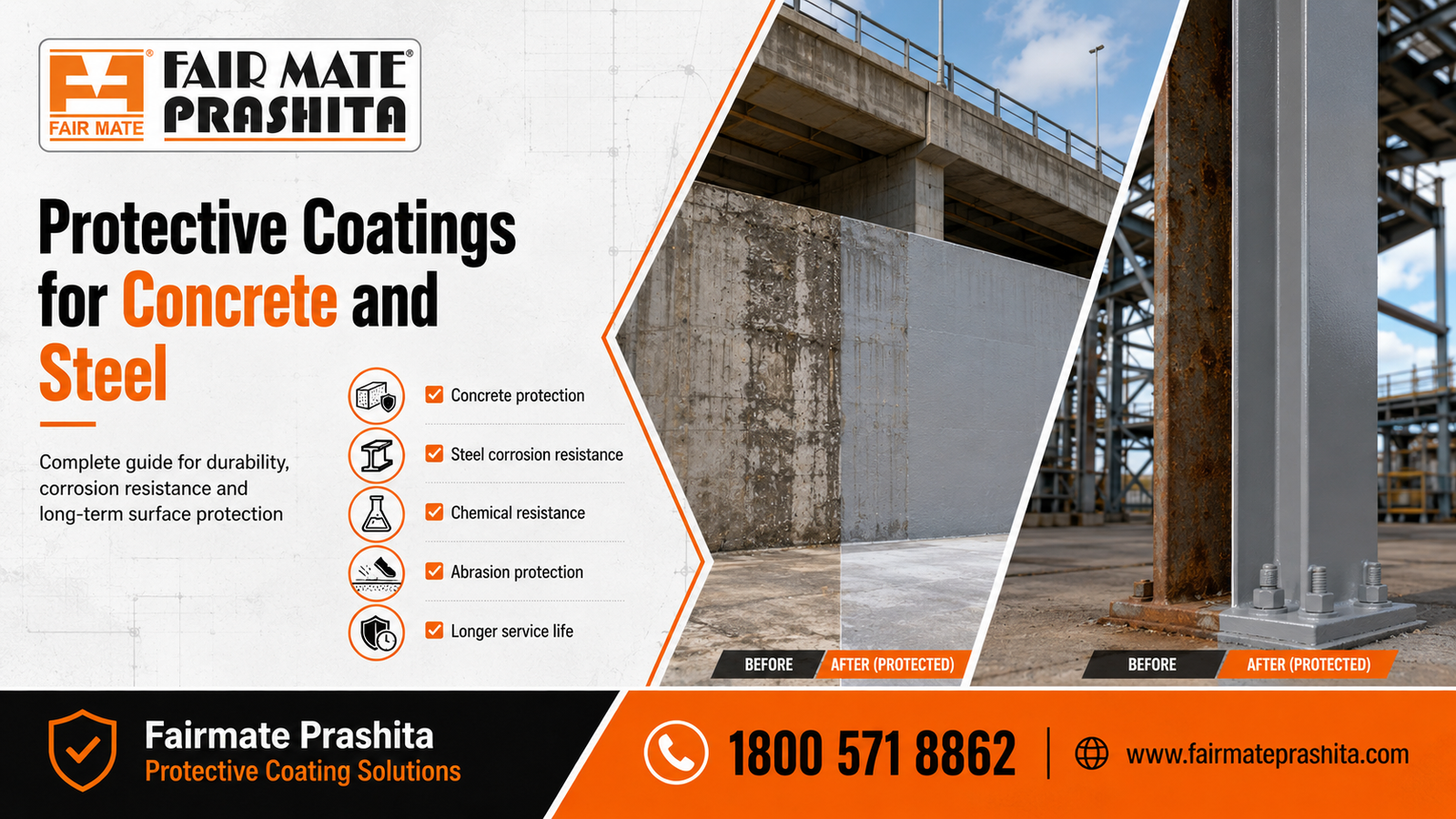
Concrete and steel are two of the most important materials used in modern construction and industrial infrastructure. From factories, warehouses, bridges, basements, water-retaining structures and parking areas to manufacturing plants and utility zones, these materials are exposed to moisture, chemicals, abrasion, carbonation, corrosion and weathering.

Protective coatings help create a durable barrier between the surface and the surrounding environment. For engineers, contractors and industrial buyers, the right coating system can improve service life, reduce maintenance cost and protect critical assets from early deterioration.

Fairmate Prashita offers construction chemical solutions including industrial flooring and protective coating systems for long-term site performance. (Fairmate Prashita)


What Are Protective Coatings?

Protective coatings are specially designed surface-applied systems used to protect concrete and steel from environmental, mechanical and chemical damage.

They are not only applied for appearance. Their main purpose is performance protection.

A good protective coating system can help improve:

✅ Surface durability
✅ Resistance to moisture ingress
✅ Resistance to chemicals and abrasion
✅ Protection against corrosion
✅ Cleanability and maintenance
✅ Long-term structural performance
✅ Aesthetic appearance of industrial and commercial spaces

For concrete and steel surfaces, coating selection should be based on exposure condition, surface condition, traffic load, chemical contact, temperature, moisture level and expected service life.


Why Protective Coatings Are Important for Concrete

Concrete is strong in compression, but it is naturally porous. Water, carbon dioxide, chlorides, sulphates and chemicals can enter through pores, cracks or weak surface zones. Over time, this may lead to reinforcement corrosion, surface scaling, cracking, dampness, dusting and durability loss.

Protective coatings for concrete help reduce direct exposure to aggressive elements.

They are commonly used for:

✅ Industrial floors
✅ Parking decks
✅ Basements
✅ Water tanks
✅ Factory walls and floors
✅ Chemical storage areas
✅ Utility rooms
✅ Commercial buildings
✅ Infrastructure structures
✅ Concrete repair protection

AMPP notes that concrete assets are coated to protect them against harsh service environments, and coating performance depends heavily on correct surface preparation. (ampp.org)


Why Protective Coatings Are Important for Steel

Steel is widely used in factories, structural frames, tanks, pipelines, platforms, equipment foundations and industrial infrastructure. However, when steel is exposed to moisture and oxygen, corrosion may begin.

Corrosion can reduce steel thickness, weaken structural performance, damage appearance and increase maintenance cost.

Protective coatings for steel help create a barrier against:

✅ Moisture
✅ Oxygen
✅ Industrial fumes
✅ Chemical splashes
✅ Weather exposure
✅ Salt-laden environments
✅ Abrasion and wear

For steel, coating selection must consider surface preparation grade, corrosion environment, dry film thickness, primer compatibility and topcoat performance.


Common Types of Protective Coatings

Different coating systems are used depending on project requirement. The most common types include:

1. Epoxy Coatings

Epoxy coatings are widely used for concrete and steel protection because of their strong adhesion, chemical resistance and durability.

They are suitable for:

✅ Industrial floors
✅ Warehouses
✅ Production areas
✅ Concrete protection
✅ Steel structures
✅ Chemical handling zones

Epoxy coatings are preferred where strength, bonding and chemical resistance are important.

2. Polyurethane Coatings

PU coatings are known for flexibility, UV resistance and abrasion resistance, depending on the system type.

They are suitable for:

✅ Exposed surfaces
✅ Parking areas
✅ Industrial floors
✅ Protective topcoats
✅ Areas requiring better weather resistance

3. Anti-Carbonation Coatings

Anti-carbonation coatings are mainly used on concrete surfaces to reduce carbon dioxide penetration and protect reinforcement from corrosion risk.

They are suitable for:

✅ RCC structures
✅ Bridges
✅ Exterior concrete walls
✅ Infrastructure projects
✅ Repair and rehabilitation work

4. Cementitious Protective Coatings

Cementitious coatings are used for concrete protection, waterproofing support and surface protection in specific applications.

They are suitable for:

✅ Water-retaining structures
✅ Basements
✅ Wet areas
✅ Concrete protection zones

5. Anti-Corrosive Coatings

Anti-corrosive coatings are used on steel surfaces to protect against rust and industrial exposure.

They are suitable for:

✅ Steel structures
✅ Tanks
✅ Pipelines
✅ Plant equipment
✅ Fabrication units
✅ Industrial sheds


Surface Preparation: The Most Important Step

Protective coating failure often starts before the coating is applied. Poor surface preparation is one of the biggest reasons for peeling, blistering, debonding, pinholes and premature failure.

For concrete, the surface must be checked for:

✅ Dust and laitance
✅ Oil, grease and contamination
✅ Weak or loose concrete
✅ Cracks and honeycombing
✅ Moisture condition
✅ Surface profile
✅ Previous coating compatibility

For steel, the surface must be checked for:

✅ Rust
✅ Mill scale
✅ Oil and grease
✅ Dust
✅ Existing coating failure
✅ Surface profile after blasting or cleaning

Concrete surface preparation standards highlight the need for a clean, sound, dry and properly profiled surface before applying coating or lining systems. (relisleeve.com)


How Protective Coatings Improve Durability

Protective coatings improve durability by limiting the contact between the structure and damaging external conditions.

They can help protect against:

✅ Water ingress
✅ Reinforcement corrosion
✅ Chemical attack
✅ Surface abrasion
✅ Carbonation
✅ Dusting
✅ Weathering
✅ Industrial contamination
✅ Cleaning chemical exposure

In industrial and infrastructure projects, durability is not optional. A failed coating can lead to downtime, repair cost, production disturbance and safety concerns.

This is why product selection and application quality must be treated as technical decisions, not only commercial decisions.


Key Areas Where Protective Coatings Are Used

Protective coatings are useful across many construction and industrial segments.

Industrial Projects

Factories, manufacturing units, warehouses, chemical plants, food processing units and utility buildings need coatings that support durability, cleanability and surface protection.

Commercial Buildings

Parking areas, service zones, basements, ramps, terrace equipment areas and exposed RCC surfaces require protective systems for long-term performance.

Infrastructure Projects

Bridges, flyovers, tunnels, water-retaining structures, treatment plants and marine-adjacent structures require protection from aggressive environments.

Steel Fabrication and Equipment

Steel tanks, platforms, pipelines, machinery bases and structural members need anti-corrosive protection to reduce rusting and maintenance frequency.


Common Protective Coating Failure Reasons

Protective coating problems can happen due to poor selection, poor preparation or poor application.

Common reasons include:

✅ Wrong coating system selection
✅ Poor surface cleaning
✅ Moisture trapped below coating
✅ Inadequate surface profile
✅ Application on weak substrate
✅ Incorrect mixing ratio
✅ Wrong application thickness
✅ Poor curing conditions
✅ Chemical exposure before full cure
✅ Incompatible primer or topcoat

To avoid failure, the project team should follow manufacturer guidance, conduct proper inspection and ensure applicators are trained for the selected system.


How to Select the Right Protective Coating

Before selecting a coating system, engineers and industrial buyers should evaluate:

✅ Surface type: concrete or steel
✅ Indoor or outdoor exposure
✅ Chemical exposure level
✅ Traffic and abrasion load
✅ Moisture condition
✅ Temperature during application
✅ Required finish
✅ Expected service life
✅ Maintenance schedule
✅ Application method
✅ Site shutdown time available

A coating used for a parking deck may not be suitable for a chemical storage area. Similarly, a steel structure exposed to industrial fumes may need a different system than an indoor equipment frame.

Correct coating selection should always be based on site condition and performance requirement.


Protective Coatings and Maintenance Planning

Protective coatings reduce maintenance, but they do not remove the need for inspection.

A proper maintenance plan should include:

✅ Regular surface inspection
✅ Checking cracks, peeling or blistering
✅ Cleaning chemical spills quickly
✅ Repairing damaged coating areas early
✅ Recoating before major failure
✅ Monitoring steel corrosion signs
✅ Checking water ponding areas

Early repair of coating damage can prevent larger surface failure and reduce long-term cost.


Fairmate Prashita Protective Coating Support

Fairmate Prashita supports engineers, contractors, applicators and industrial buyers with construction chemical solutions for concrete protection, industrial flooring, waterproofing, repair, grouting and protective coating requirements. (Fairmate Prashita)

Our technical team can help guide product selection based on surface type, project condition and performance requirement.

For coating support, connect with Fairmate Prashita.

📞 Call: 1800 571 8862
🌐 Website: www.fairmateprashita.com


Best Product Links:-

  1. SAFECORE PUD
    Best anchor text: polyurethane dispersion protective coating
    Use in section: Common types of protective coatings
  2. SAFECORE ANTICORROSIVE COAT
    Best anchor text: anti-corrosive coating for steel and rebars
    Use in section: Why protective coatings are important for steel
  3. SAFECORE EP PRIMER
    Best anchor text: epoxy primer for protective coating systems
    Use in section: Surface preparation and primer compatibility
  4. FAIRCOAT ELASTOMERIC
    Best anchor text: elastomeric protective coating
    Use in section: Protective coatings for exterior concrete surfaces

Conclusion

Protective coatings are essential for improving the durability, service life and performance of concrete and steel structures. They protect surfaces from moisture, corrosion, chemicals, abrasion, carbonation and industrial exposure.

For engineers and industrial buyers, the right coating system can reduce maintenance cost, improve safety and extend asset life. However, coating performance depends on correct product selection, proper surface preparation, skilled application and regular inspection.

Whether the project involves concrete floors, steel structures, basements, parking areas, factories, warehouses or infrastructure assets, protective coatings should be selected with a clear technical approach.

Request coating support from Fairmate Prashita for the right protective coating solution for your project.
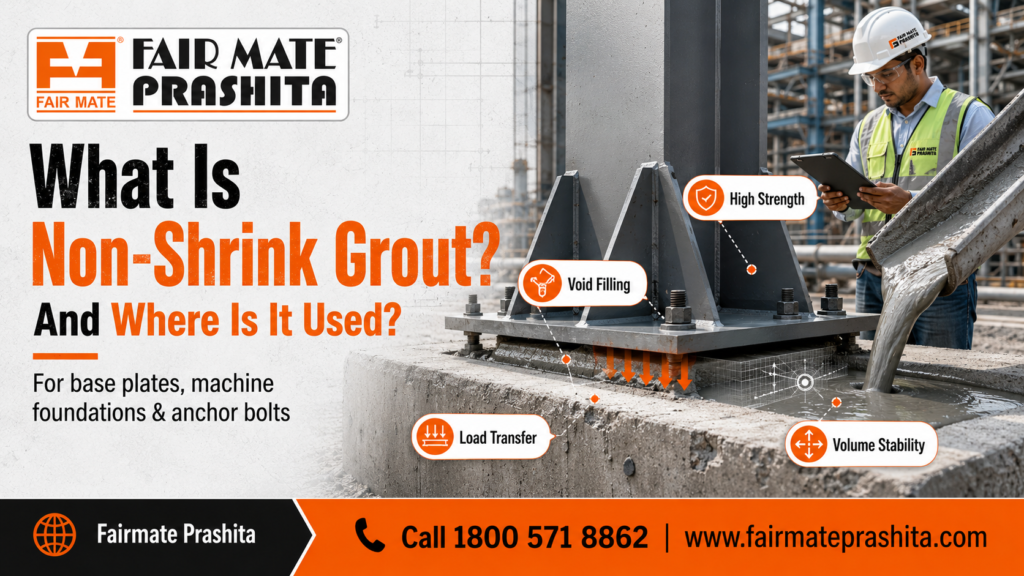
What Is Non-Shrink Grout and Where Is It Used?

What Is Non-Shrink Grout and Where Is It Used?

What Is Non-Shrink Grout and Where Is It Used?

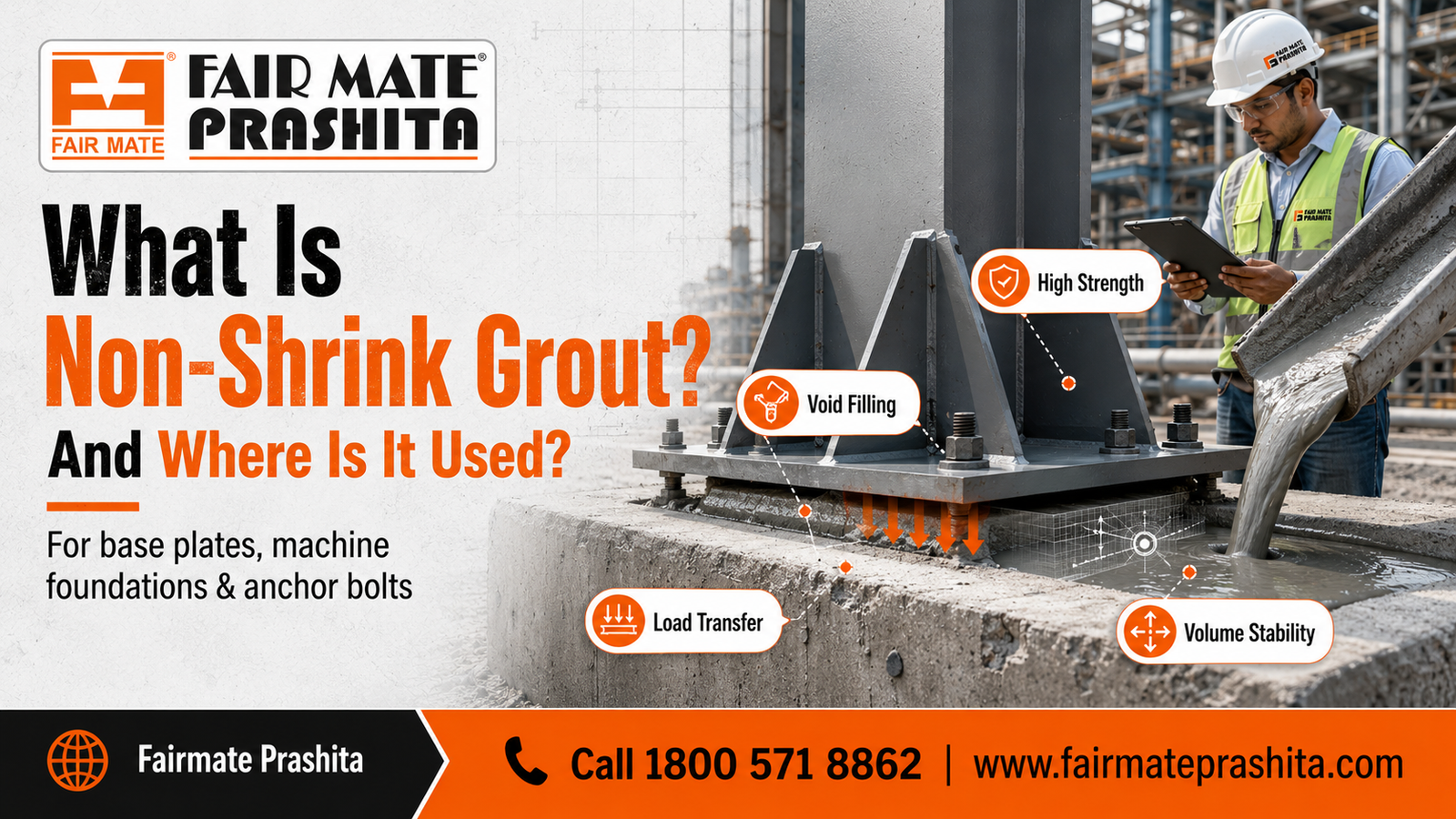
In construction, even a small void below a machine base plate, column base, anchor bolt or structural connection can create major performance problems. These voids can lead to poor load transfer, vibration, misalignment, cracking, settlement and long-term maintenance issues. This is why ordinary cement mortar is not suitable for precision grouting applications.

Non-shrink grout is a specially designed construction chemical used to fill gaps, cavities and spaces where strong, stable and reliable load transfer is required. Unlike ordinary mortar, non-shrink grout is engineered to maintain volume stability after placement. It flows into restricted spaces, fills voids properly and develops high strength without excessive shrinkage.

For industrial, commercial and infrastructure projects, non-shrink grout is widely used below base plates, machinery foundations, stanchion bases, precast elements, bridge bearings, anchor bolts, crane rails and structural connections. It plays a critical role in ensuring that loads are transferred evenly from steel or equipment to the concrete foundation.

Fairmate Prashita offers advanced engineering grout solutions under the FLOWGROUT range. The official engineering grout page describes FLOWGROUT as a wide range of cementitious, epoxy and polyurethane-based grouts with non-shrink, free-flowing and high-strength properties. These are used for base plate grouting, injection grouting and anchoring of rebars. (Fairmate Prashita).

What Is Non-Shrink Grout?

Non-shrink grout is a pre-packed, high-strength grouting material that is mixed with a controlled amount of water or resin component depending on the product type. It is designed to flow into gaps and cavities without segregation, bleeding or excessive shrinkage.

The term “non-shrink” does not simply mean that the material never changes volume. It means the grout is formulated to compensate for normal cementitious shrinkage and maintain proper contact with the surfaces it supports. This is important below base plates and machines because even minor gaps can reduce stability and affect load distribution.

A good non-shrink grout should offer:

  • High compressive strength
  • Free-flowing or pourable consistency
  • Good bond with concrete and steel
  • Volume stability
  • Low permeability
  • Resistance to vibration and dynamic loads
  • Easy placement in confined spaces
  • Durability under site conditions

Fairmate Prashita’s FLOWGROUT 60 is described as an ultra-high-strength, free-flowing, non-shrink cementitious grout. It is non-metallic, chloride-free and designed for general-purpose grouting under dynamic loads. The product page states that it flows under base plates and bolt pockets and attains 650 kg/cm² compressive strength at 28 days. (Fairmate Prashita)

Why Ordinary Mortar Is Not Enough

Many site failures happen because normal cement-sand mortar is used for base plate or machinery grouting. Ordinary mortar may look strong after hardening, but it can shrink, crack, bleed, segregate and fail to fill hidden voids properly.

In high-load or vibration-prone areas, ordinary mortar can lose contact with the base plate. This creates uneven load transfer. Over time, vibration can loosen anchors, damage equipment alignment and create cracks in the foundation.

Non-shrink grout is designed specifically to solve this problem. It fills gaps properly, remains stable and supports stronger contact between the foundation and the supported element. This helps improve safety, performance and durability.

Types of Non-Shrink Grout

1. Cementitious Non-Shrink Grout

This is the most commonly used type for general construction and industrial grouting. It is supplied as a ready-to-use powder and requires only measured water at site. It is suitable for base plates, columns, stanchion bases, equipment foundations and precast connections.

FLOWGROUT 40 and FLOWGROUT 60 are suitable product mentions for cementitious non-shrink grouting applications.

2. High-Strength Grout

High-strength grout is used where higher compressive strength, durability and load-bearing capacity are required. It is suitable for heavy machinery, industrial units, infrastructure projects and structural grouting.

FLOWGROUT 60 is a relevant product here because it is described as ultra-high-strength, free-flowing and non-shrink.

3. Epoxy Grout

Epoxy grout is used where extreme chemical resistance, vibration resistance, heavy loads or very high performance is required. It is commonly used for heavy-duty machinery, turbines, compressors, pumps, industrial equipment and precision alignment.

Relevant Fairmate Prashita product mentions include FLOWGROUT EP and FLOWGROUT EP(L) from the FLOWGROUT engineering grout range. The FLOWGROUT product list on the website includes FLOWGROUT EP, FLOWGROUT EP(H), FLOWGROUT EP(L), FLOWGROUT EPLV and related epoxy grout variants. (Fairmate Prashita)

4. Anchoring Grout

Anchoring grout is used for fixing anchor bolts, rebars, dowels and structural steel elements into concrete. It helps create a strong connection between steel and concrete.

Fairmate Prashita’s engineering grout product list includes ANCHORGROUT and ANCHORFIX RESIN CAPSULE, making them suitable mentions for anchoring and fixing applications. (Fairmate Prashita)

Where Is Non-Shrink Grout Used?

1. Base Plate Grouting

This is one of the most common uses of non-shrink grout. Steel columns, machines and equipment are mounted on base plates. The grout fills the gap between the concrete foundation and the base plate to provide uniform load transfer.

If this gap is not filled correctly, the base plate may not sit properly, causing uneven pressure, cracks or movement. Non-shrink grout ensures strong contact and stable performance.

2. Machine Foundation Grouting

Machinery such as pumps, compressors, generators, turbines, presses and industrial equipment requires stable foundations. These machines often create vibration and dynamic loads.

Non-shrink grout helps maintain alignment and transfers load safely to the foundation. For dynamic load conditions, high-strength cementitious grout or epoxy grout may be selected depending on project requirements.

3. Anchor Bolt and Bolt Pocket Grouting

Anchor bolts need proper embedment and surrounding support. Non-shrink grout is used to fill bolt pockets and secure the bolts in position. FLOWGROUT 60 is specifically described as freely flowing under base plates and bolt pockets. (Fairmate Prashita)

4. Crane Rail and Stanchion Base Grouting

Industrial buildings, warehouses, factories and plants often use crane rails and stanchion bases. These areas are exposed to heavy loads and repeated movement. Non-shrink grout helps support load-bearing steel elements and reduces the risk of settlement or cracking.

5. Precast Concrete Connections

Precast construction requires precise connection between elements. Non-shrink grout is used for joints, sleeves, pockets and connection gaps to ensure proper bonding and load transfer.

6. Bridge Bearings and Infrastructure Work

Bridges, flyovers, metro structures and infrastructure projects require reliable grouting below bearings and structural plates. Non-shrink grout helps achieve uniform support and long-term durability in these critical areas.

7. Rebar Anchoring and Structural Fixing

When rebars, dowels or anchors are fixed into existing concrete, anchoring grout or resin capsule systems help create a strong bond. This is important in strengthening, retrofitting, repair and structural extension works.

8. Injection Grouting

Some engineering grout systems are also used for filling voids, cracks and cavities through injection methods. Fairmate Prashita’s engineering grout category includes injection grouting range products under FLOWGROUT. (Fairmate Prashita)

Benefits of Non-Shrink Grout

Non-shrink grout provides several important benefits for construction and industrial projects:

  • It fills gaps and voids effectively
  • It provides high compressive strength
  • It ensures uniform load transfer
  • It reduces risk of cracking and settlement
  • It supports machinery alignment
  • It performs better than ordinary mortar
  • It helps resist vibration and dynamic loads
  • It bonds well with concrete and steel
  • It supports long-term durability
  • It improves reliability of structural connections

For project owners and engineers, the biggest benefit is performance assurance. Non-shrink grout helps reduce the risk of hidden gaps and weak contact zones that may affect the structure or equipment later.

Correct Application Method Matters

Even the best non-shrink grout can fail if applied incorrectly. Site teams must follow correct surface preparation, mixing, placement and curing methods.

Before grouting, the concrete surface should be clean, sound and free from oil, dust, laitance and loose particles. The area should be properly shuttered to avoid leakage. Water should be measured accurately as per product requirement. Over-watering should be avoided because it can reduce strength and cause segregation.

Mechanical mixing is preferred for uniform consistency. The grout should be poured continuously from one side to avoid air entrapment. After placement, curing and protection should be done as recommended.

For epoxy grout, surface preparation, mixing ratio, pot life, temperature and chemical exposure conditions must be carefully followed.

How to Select the Right Non-Shrink Grout

The right grout depends on:

  • Gap size
  • Load condition
  • Dynamic or static loading
  • Required compressive strength
  • Chemical exposure
  • Temperature condition
  • Equipment type
  • Foundation design
  • Application thickness
  • Site accessibility
  • Required setting time
  • Cementitious or epoxy requirement

For general base plate grouting, a cementitious non-shrink grout may be sufficient. For heavy industrial equipment, epoxy grout or ultra-high-strength grout may be required. For large-section grouting, aggregate-filled or special-grade grout may be preferred. For anchoring work, anchoring grout or resin capsule systems may be selected.

This is why technical consultation is important before final product selection.

Conclusion

Non-shrink grout is an essential construction chemical for precision grouting, base plate support, machine foundations, anchor bolts, bridge bearings, precast connections and industrial structural applications. It provides high strength, free flow, volume stability and reliable load transfer where ordinary mortar cannot perform.

Fairmate Prashita offers engineering grout solutions under the FLOWGROUT range, including cementitious, epoxy, polyurethane, anchoring and injection grouting options. For the correct grout selection, application method, dosage and project-specific technical support, read the full guide and call 1800 571 8862.

Fairmate Prashita
Advanced Construction Chemical Solutions
Corporate Office: 2nd Floor, Sarang House, Sheetal Nagar, Akota, Vadodara, Gujarat 390020
📞 Toll Free: 1800 571 8862
🌐 Website: www.fairmateprashita.com
📧 Email: support@fairmateprashita.com

Waterproofing Chemicals for Roofs: Best Solutions for Long-Lasting Roof Protection

terrace roof waterproofing

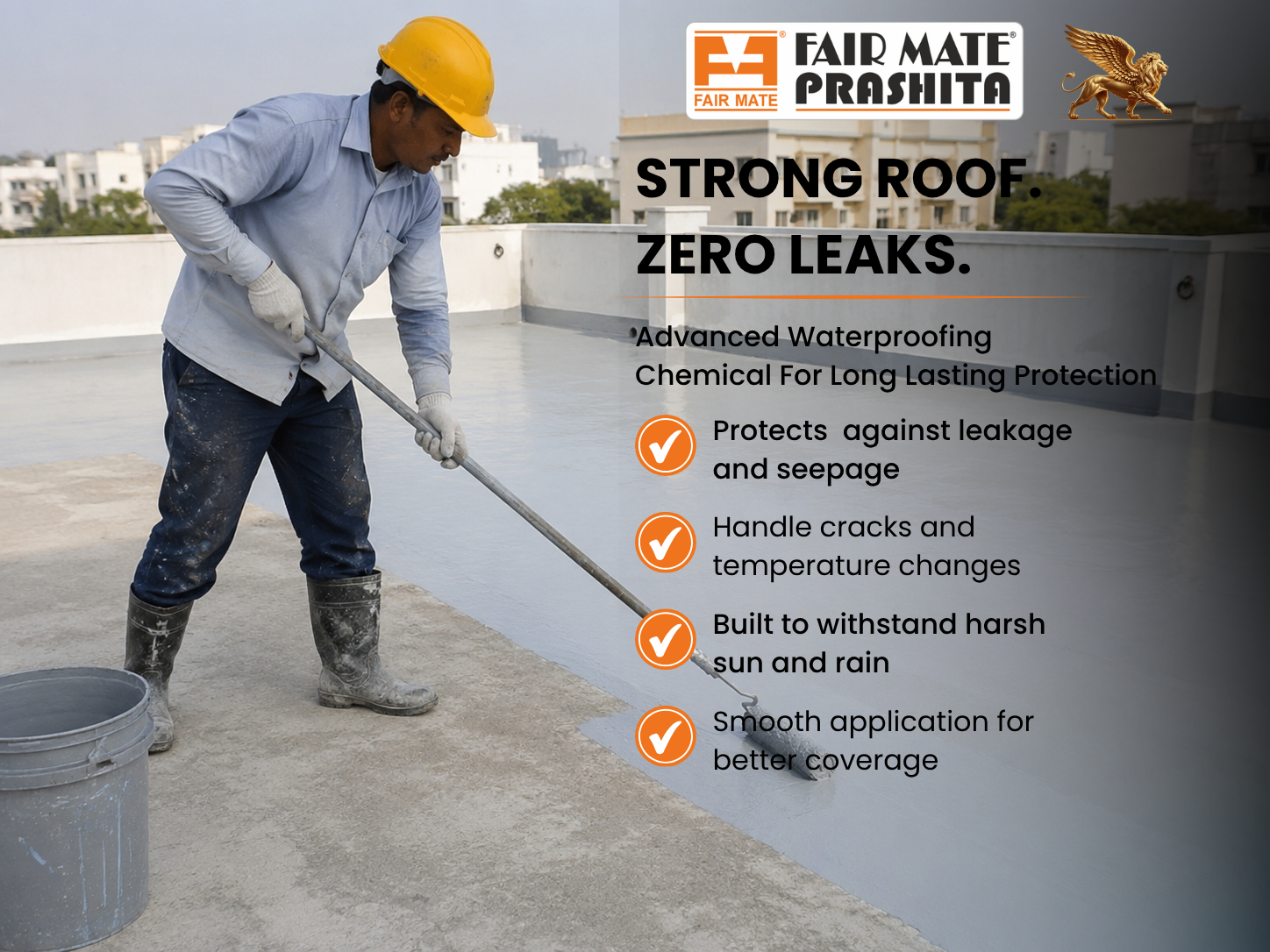
A roof is one of the most exposed parts of any building. It faces direct sunlight, rainfall, temperature changes, wind, pollution and continuous surface movement. Over time, these conditions can create cracks, damp patches, leakage, seepage and deterioration in concrete roof slabs. That is why choosing the right waterproofing chemicals for roofs is essential for every residential, commercial and industrial structure.

Whether it is a new building, an old terrace, a commercial roof slab or an industrial facility, roof waterproofing should never be treated as a temporary repair. It is a protective system that helps stop water ingress, reduce maintenance costs and increase the service life of the structure.

At Fairmate Prashita, we offer advanced construction chemical solutions for waterproofing, concrete repair, flooring, grouting, protective coatings and structural durability. Our WATERGUARD waterproofing systems are developed to support engineers, contractors, builders and applicators with reliable roof and terrace waterproofing performance.


What Are Waterproofing Chemicals for Roofs?

Waterproofing chemicals for roofs are specially formulated materials applied on roof slabs, terraces, concrete surfaces and exposed areas to stop water penetration. These chemicals create a protective barrier over the surface or within the concrete pores, depending on the type of waterproofing system used.

A good roof waterproofing chemical should provide:

  • Strong adhesion to concrete and masonry
  • Water resistance against rain and seepage
  • Flexibility to handle thermal movement
  • Crack-bridging performance
  • UV and weather resistance for exposed terraces
  • Long-term durability under Indian climatic conditions
  • Easy application by brush, roller, spray or trowel

Modern roof waterproofing is not just about applying a coating. It is about selecting the right system based on the roof condition, surface type, crack pattern, drainage slope, exposure level and expected performance.


Why Roof Waterproofing Is Important

Roof leakage usually starts slowly. A small crack, weak joint, poor slope or untreated surface may allow water to enter the roof slab. Once water enters the concrete, it can lead to dampness, paint peeling, corrosion of reinforcement, mould growth and structural deterioration.

Proper roof waterproofing helps prevent:

  • Terrace leakage during monsoon
  • Damp patches on ceilings and walls
  • Concrete deterioration due to moisture
  • Corrosion of steel reinforcement
  • Repeated repair expenses
  • Damage to interiors, electrical systems and furniture
  • Reduced building life

For Indian weather conditions, especially during heavy rainfall and high heat exposure, roof waterproofing chemicals must be selected carefully. A roof surface expands and contracts due to temperature variation, so the waterproofing layer should remain flexible and strongly bonded.


Common Causes of Roof Leakage

Before selecting the best waterproofing chemical for a roof, it is important to understand why leakage happens. Most roof leakage problems are caused by one or more of the following issues:

1. Hairline Cracks in Concrete

Concrete naturally develops micro-cracks due to shrinkage, thermal movement or poor curing. These cracks allow water to slowly penetrate the slab.

2. Poor Surface Slope

If water remains stagnant on the terrace, it increases pressure on the surface and may enter through weak points.

3. Weak Parapet Wall Joints

The junction between the roof slab and parapet wall is one of the most common leakage points.

4. Damaged Old Waterproofing Layer

Old coatings may lose adhesion, crack or peel due to UV exposure and weathering.

5. Improper Application

Even the best roof waterproofing chemical may fail if the surface is not cleaned, cracks are not repaired or coats are not applied properly.

6. Pipe Penetrations and Drainage Outlets

Areas around pipes, rainwater outlets and joints require proper detailing. Without correct sealing, these points become leakage paths.


How to Choose the Best Waterproofing Chemical for Roofs

The best waterproofing chemical for roof protection depends on the surface condition and site requirement. There is no single product that fits every roof. Before selecting a waterproofing system, check the following points:

1. Type of Roof Surface

Concrete roof slabs, tiled terraces, metal roofs and old coated surfaces may need different preparation and product selection.

2. New Roof or Old Roof

New construction may need preventive waterproofing, while old roofs may require crack repair, surface restoration and re-waterproofing.

3. Exposure to Sunlight

For exposed terraces, UV-resistant acrylic or elastomeric coatings are preferred.

4. Water Ponding

If water remains stagnant, slope correction and proper drainage should be done before waterproofing.

5. Crack Condition

Hairline cracks, active cracks and structural cracks need different treatment methods.

6. Foot Traffic

If the roof will be used frequently, the waterproofing layer may require additional protection.

7. Application Method

Some products are brush-applied, some are roller-applied and some may require professional applicators.

For best results, a technical site inspection is recommended before final product selection.


Step-by-Step Roof Waterproofing Application Process

A good waterproofing chemical can perform properly only when applied correctly. Follow this general roof waterproofing process:

Step 1: Surface Inspection

Check the roof for cracks, hollow areas, old coating failure, water ponding, weak plaster and drainage issues.

Step 2: Surface Cleaning

Remove dust, oil, loose particles, old paint, laitance, algae and weak material from the roof surface.

Step 3: Crack Repair

Repair all visible cracks, joints, pipe penetrations and parapet junctions before waterproofing.

Step 4: Slope and Drainage Correction

Water should flow properly toward drain outlets. Waterproofing should not be used as a replacement for poor slope correction.

Step 5: Surface Dampening or Priming

Depending on the waterproofing chemical, the surface may need dampening or primer application.

Step 6: First Coat Application

Apply the first coat uniformly using brush, roller or trowel as per product guidelines.

Step 7: Second Coat Application

Apply the second coat after the first coat dries. In many systems, the second coat is applied perpendicular to the first coat for better coverage.

Step 8: Detailing at Critical Areas

Give special attention to corners, drain outlets, pipe penetrations and parapet joints.

Step 9: Curing and Protection

Allow proper drying and curing time. Avoid foot traffic or water exposure before the system is ready.

Step 10: Final Inspection

Check the full roof surface for missed areas, pinholes, cracks or weak patches.


Why Choose Fairmate Prashita for Roof Waterproofing Chemicals?

Fairmate Prashita provides advanced construction chemical solutions for waterproofing, concrete repair, grouting, flooring, protective coatings and admixtures. For roof and terrace waterproofing, our WATERGUARD range is designed to support practical site requirements with durable, easy-to-apply and performance-focused systems.

For roof and terrace waterproofing, Fairmate Prashita offers a wide range of WATERGUARD Waterproofing Systems, including WATERGUARD ROOFCOAT for acrylic roof coating, WATERGUARD LIQUID MEMBRANE for flexible liquid-applied membrane waterproofing, WATERGUARD PU LIQUID MEMBRANE for polyurethane-based waterproofing, WATERGUARD A for cementitious waterproofing coating, and WATERGUARD CRYSTALLINE for crystalline waterproofing requirements. For concrete and plaster waterproofing during construction, FAIRCRETE RMW can also be considered as an integral waterproofing additive. 

Fairmate Prashita waterproofing advantages:

  • Wide range of WATERGUARD waterproofing systems
  • Solutions for roof slabs, terraces, tanks, basements and wet areas
  • Technical support for product selection
  • Suitable systems for new construction and repair projects
  • Strong focus on durability, adhesion and water resistance
  • Support for contractors, applicators, builders and engineers
  • Trusted construction chemical expertise for Indian site conditions

Whether the issue is roof leakage, terrace seepage, dampness, cracks or preventive waterproofing, Fairmate Prashita can help you choose the right waterproofing chemical for your project.

Conclusion

Waterproofing chemicals for roofs are essential for protecting buildings from leakage, seepage, dampness and long-term structural damage. A roof is constantly exposed to rain, heat, UV rays and surface movement, so selecting the right waterproofing system is a critical decision.

For concrete roof slabs and terraces, solutions such as cementitious waterproofing coatings, acrylic waterproofing coatings, liquid waterproofing membranes and polyurethane waterproofing systems can provide strong and durable protection when applied correctly.

If you are looking for reliable roof waterproofing chemicals, terrace waterproofing chemicals or a professional roof leakage solution, Fairmate Prashita’s WATERGUARD range offers practical and performance-driven options for different site requirements.

Protect your roof before leakage becomes a costly repair.
For product guidance, technical support or waterproofing solution selection, contact Fairmate Prashita today.

Call: 1800 571 8862
Website: www.fairmateprashita.com


FAQs

1. Which is the best waterproofing chemical for roofs?

The best waterproofing chemical for roofs depends on the roof type, crack condition, exposure and leakage severity. Cementitious coatings, acrylic waterproofing coatings, liquid membranes and polyurethane coatings are commonly used for roof waterproofing.

2. Which waterproofing chemical is best for terrace leakage?

For terrace leakage, flexible waterproofing coatings such as acrylic coatings, cementitious waterproofing systems or liquid waterproofing membranes are commonly recommended. The final choice should be made after checking cracks, slope, drainage and surface condition.

3. Can waterproofing chemicals stop roof leakage permanently?

Waterproofing chemicals can provide long-term leakage protection when the correct system is selected and applied properly. Surface preparation, crack repair, slope correction and proper coating thickness are important for durable performance.

4. How many coats are required for roof waterproofing?

Most roof waterproofing systems require two or more uniform coats. Some cementitious and acrylic systems may require 2–3 coats depending on site condition and product guidelines.

5. Can waterproofing be done during monsoon?

Waterproofing should ideally be done before monsoon. Application during active rain or on unsuitable wet surfaces can affect bonding and performance. Emergency leakage treatment may be possible in some cases, but full waterproofing should be planned in dry weather.

6. Is roof waterproofing different from terrace waterproofing?

Roof waterproofing and terrace waterproofing are closely related. A terrace is usually an accessible roof surface, so it may need additional attention to foot traffic, slope, cracks, parapet joints and drainage outlets.

7. Why does roof waterproofing fail?

Roof waterproofing may fail due to poor surface preparation, wrong product selection, inadequate crack repair, low coating thickness, poor drainage, trapped moisture or incorrect application method.

GET IN TOUCH

Schedule a Call