FAIRMATE WALL PLASTER

A READY TO USE POLYMER BASED WALL PUTTY

Description

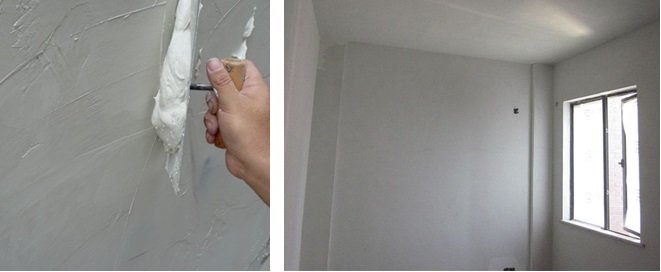
FAIRMATE WALL PLASTER is a polymer based Off- White colored wall putty. It has excellent adhesion on any cement surfaces.

Benefits

1. Excellent adhesion.
2. Excellent thixotropicness.
3. Excellent bonding & finishing.
4. No curing is required.
5. Excellent consistency hence suitable for application.
6. Can be used in Interiors.
7. Cost-effective.
8. Easy to apply.
9. By using FAIRMATE WALL PLASTER less coats of FAIRCOAT of certain color needed to apply. Almost replaces the
application of Primer Coat.
10. It has an excellent coverage of 11 Sq. Ft. per kg of the product.

Recommended Uses

1. FAIRMATE WALL PLASTER is suitable for use on both precast and conventional building areas on new internal
surfaces of precast concrete, sand cement plaster etc.
2. Can be used as putty before applying FAIRCOAT of related color. E.g. Off White
3. Can be used in Interiors and Exteriors.

Application Instructions
Surface Preparation :

The surface for the application should be absolutely dry. There should be at least 10 days gap before FAIRMATE WALL PLASTER is applied for newly plastered surfaces. Remove all loose material and wipe off the powder with cotton cloth.

Application :

Apply FAIRMATE WALL PLASTER with painter’s putty knife or mason’s steel trowel on the surface. Allow to dry it completely and rub the surface with emery paper No. 320. The loose powder on surface should be wiped off with cotton waste.

FAIRCOAT

PROTECTIVE, DECORATIVE, ANTI-CARBONATION COATING FOR EXTERIOR / INTERIOR SURFACES

DESCRIPTION

FAIRCOAT is ready to use aliphatic elastomeric based coating containing special polymers and fillers. FAIRCOAT provides extremely tough protective decorative coating that allows surface to breathe. FAIRCOAT has been specially designed for the decoration and protection of concrete against attack from atmospheric carbon dioxide, airborne chlorides, acid rain, weathering etc. FAIRCOAT is non-flammable and hence can be used in interiors also. FAIRCOAT has excellent adhesion to the substrate and cures to form a flexible film that allows the surface to breath and acts as carbon dioxide barrier thus protecting the concrete in aggressive weather conditions. It has excellent gap bridging ability and does not age with time, and forms an extremely durable film.

BENEFITS

• Anti-carbonation properties
• Good weathering properties (Anti algal and anti-fungal)
• Excellent bond with concrete substrate
• Forms flexible film
• Gap bridging properties
• Allows substrate to breath
• Choice of colours
• Single pack, brush applied
• Non-toxic/Non-flammable
• Excellent waterproof coating
• Economical

USES INCLUDE

• FAIRCOAT provides a smooth decorative durable coating for concrete and masonry surfaces like big commercial buildings, public places, residential building etc.

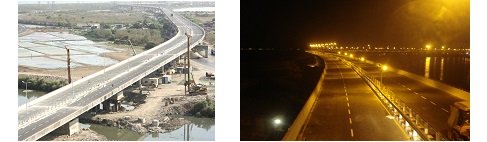
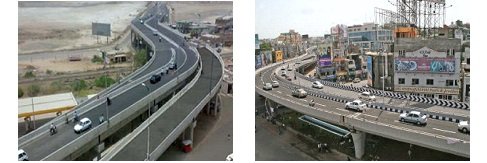
Longest fly over of India at Hyderabad, P V Narasimha Rao Elevated Expressway protected with FAIRCOAT- Anti carbonation coating.

Eastern Freeway Flyover, Mumbai (17 km signal free freeway) is the 2nd largest flyover in the country protected with FAIRCOAT- Anti carbonation coating.

FAIRBOND CS

SEGMENTAL CONCRETE BRIDGE BONDING

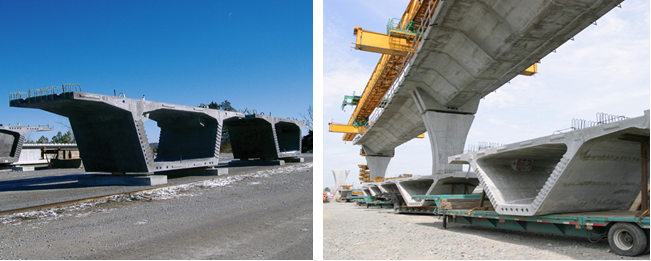
FAIRMATE supplied the concrete admixtures and other products for the precast and insitu concrete works on this structure, and now we develop a high strength epoxy resin adhesive system, to bond the joints between the precast concrete segments.

The Successful combination of new pre-stressing systems with new assembly equipment led to the development of the precast segmental construction method for bridges. The most important first developments were probably in 1940s, and it is now used by many of engineers, contractors, equipment producers and manufacturers around the world. It has become established and used successfully on numerous large projects, including many of the world’s most important recent bridge structures.

FAIRBOND CS PRODUCTS – SEGMENTAL BRIDGE BONDING

FAIRBOND CS (S) & FAIRBOND CS (W) has been used extensively for a segmental bridge bonding construction applications, the need became clear for a specific range of segmental bridge adhesive which could meet the different and increasingly precise requirements of bridge designs and at the different working temperatures which occur during their construction periods. These included application in daytime temperatures of up to 45°C, curing during very low and cold night time temperatures, plus the rapid erection cycles demanded for the precast segments.

The FAIRBOND CS (S) & FAIRBOND CS (W) were the result – a range of adhesives, optimized for the specific technical requirements, suitable for use on the most challenging bridge projects. This is based on a reactive hardening epoxy binder system, with optimized filler granulometries, so that the products support the continuously optimized production process of segmental bridge construction.

The Fairbond CS (S) & Fairbond CS (W) (segmental bridge adhesive) range, which fully complies with FIP and AASTHO standards, but also to be able to meet the specific requirements of each construction site.

The application and characteristics of segmental bridge bonding products must be carefully matched so that the adhesive can meet the following requirements:

• To bond the surfaces so that compressive and shear forces also the tensile forces can be safely convey from to every bridge segment.
• To lubricate the joint faces between the segments to make them easier to finally position together during their installation.
• To seal the joints between the segments against future ingress of water and de-icing salts etc,i.e. to protect the prestressing cables against corrosion.

THE PERFORMANCE REQUIREMENTS

In order to meet all these requirements under the different site application conditions, including variable temperatures/ moisture contents/ mixing and application methods etc., the epoxy adhesive must have carefully selected precisely defined characteristics and test methods to confirm these.

The table below contains the main criteria covered by “International Federation of Prestressing” FIP (now developed as fib “Federation international de beton) and AASTHO (American Association Of State Highway and Transportation Officials), which have also shown the FAIRBOND CS products specification.

EPOXY JOINTING ADHESIVE

Purposes of Epoxy

The purposes of using an epoxy resin in the joint between the segments are:

• To maintain the structural integrity of the joint and maintain a monolithic concrete segment
• To completely fill any minor surface imperfections and irregularities between the match cast surfaces
• To provide a water and grout tight seal, preventing chloride intrusion
• To act as a lubricant when erecting the segment
• To ensure tight fit between the segments so that the compressive and shear stresses are transmitted directly across the joint

TYPES AND APPLICATION OF EPOXY

Epoxy comes in two part compounds consisting of a resin and hardener. When mixed together, they begin curing which can take anywhere from a few minute to a few hours, depending on the formulation, the site and storage temperature and the mass of the epoxy, The cure time will be shorter when epoxies are mixed in higher temperature conditions and in larger masses.

Segmental bridge epoxies are specially formulated as either normal or slow setting resins. For Segment by segment erection, the normal set epoxies are used and for span by span erection, the slow set epoxies are used. It is important to use the correct pot life and correct temperature range to ensure good working time and proper strength gain of the epoxy.

Surface preparation:

Concrete should be mechanically sound and free form contamination such free water, mould oil, grease, laitance or dust. A dry grit blasting on the surface is recommended for optimum adhesion. Sections to be checked for good alignment. A ‘dry run’ before the first application of the adhesive is recommended to ensure correct timing.

Mixing:

The contents of hardener should be added in to the base and mixed for 2-3 minutes with a paddle attached slow speed heavy duty drill. It should be ensured that the sides and base of the can is thoroughly scrapped down. A uniform grey colour should be obtained after homogenous mixing.

Application:

The mixed adhesive should be applied at required thickness to both laying surfaces with a serrate trowel or other suitable spreader. The joint should be closed immediately. If this is not achieved the surface of the adhesive should be slightly scratched immediately prior to closing the joint to be exposed fresh adhesive. The joint must be closed within the open time of the adhesive. On site monitoring of the operation using lapped asbestos cement panels is recommended.

When the segments are brought together and stressed, excess epoxy is squeezed out. For joints over traffic or water, procedures must be implemented to avoid dropping below. Once the segments has been joined and stressed, all excess epoxy should be cleaned. If leaving it to harden will make it more difficult to remove later on.

Cleaning:
Tools and equipment should be using SAFECORE TOOL CLEANER immediate after use.

SHELF LIFE AND STORAGE
FAIRBOND CS (W) & FAIRBOND CS (S) will have a shelf life of 12 months in un-opened containers when kept in dry conditions at a temperature 5 0c to 30 0c. Storage at higher temperature or high humidity may reduce the shelf life.

HEALTH AND SAFETY

FAIRBOND CS (W) & FAIRBOND CS (S) is non-flammable. However, it should not come in contact with skin and eyes. If accidental skin contact occurs, remove immediately by washing with soap and water – Do not use solvent. In case of contact with eyes, rinse immediately with plenty of water and seek medical advice. Avoid inhalation of vapors and ensure adequate ventilation. Wear suitable protective clothing, gloves and eye/face protection. Barrier creams provide additional skin protection. If swallowed seek medical attention immediately. Do not induce vomiting. For further information see SAFECORE Safety Data sheet.

QUALITY ASSURANCE
Fairmate manufactures entire range of construction chemicals under compliance of ISO 9001, ISO (EMS) 14001 & OHSAS 18001 (Occupational Health and Safety) certified by ISOQAR / UK.

TECHNICAL SERVICES
While new advances and changes will take place but one thing will never change is quality and meeting special needs of our customers. Our laboratory in Baroda and technical personnel & experts are available to provide additional information and technical assistance. We are eager to work with you in development of new product and resolve your problem.

FAIRCRETE RMW

INTEGRAL WATERPROOFING ADDITIVE FOR CONCRETE AND PLASTER

Water leakage and seepage is the enemy of all structures. It is important to build correctly with due attention to water proofing of basements, exterior walls, roofs and building watertight pipelines. Large numbers of structures lack proper implementation and thereby have less life. If water enters and starts damaging any part of the structure, early repair action must be taken. For excessive damaged structure restoration may be possible by use of repair chemicals after ensuring structural safety.
We realize there is a need to provide building professionals with suitable specialized information to enable them to ensure higher life of all structures. FAIRMATE CHEMICALS PVT. LTD. is a step in that direction. In the developed countries, use of Construction Chemicals is quite extensive. India has to catch up with high growth rates in this field.
Leakage is a common problem in any home or structure, caused either by the age of the structure, or improper
construction and design methods. Some of the most common reasons for water leakage in structures are elaborated below:

1.Construction Practices

• Untrained man power
• Improper preparation of mortar and concrete mixes
• Use of excess water for to make mixes easily workable, which results in porous concrete, inviting leakage.
• Bleeding & segregation in concrete resulting in honey combing/voids
• Inappropriate compaction/vibration of concrete
• Inadequate curing in early and later stages
• Negligence in site supervision.

2.Inappropriate Material Selection

Enough care is not taken in specifying the correct construction materials such as :

• Right quality & grade of cement depending on service requirements
• Good quality crushed aggregates of various sizes depending on mix proportion
• Sand free from silt and other chemicals
• Potable water, i.e. water should not contain any chlorides, etc.
• Other chemical and mineral additives that can increase the durability of construction

3.Aggressive Climatic Conditions

Environment plays an important role in determining the durability of any structure. More aggressive the climate, more stringent is the precautions to be taken. Structures which are exposed to marine regions or situated in polluting industrial belts, are more prone to chemical attack.

4.Mechanical Damage

Concrete structures are not often used only for the purpose they have been designed, but subjected to forces such as excessive loading, impact, abrasion and other mechanical damages. As a result, structural cracks develop in slabs. These too contribute to the problem.

5.Inadequate Maintenance

Problems like cracks, dampness, etc. are neglected in the initial stages and timely corrective measures are not undertaken, ultimately leading to deterioration of the structure. It is advisable to undertake preventive maintenance and carry out timely repairs through a competent contractor, the correct specification for materials and methods, depending upon the problem.

Diagnosing the root cause of the problem is vital. Only then a suitable solution can be arrived.
The treatment will then be cost effective from the long term point of view. Repair or maintenance must be done

systematically as under:
Visual inspection

Non destructive testing as advised by a consultant or an expert, if required Once the diagnosis is done, a proper scheme can be made to undertake repair and rehabilitation work using suitable materials aided by construction chemicals.

Benefits
• Ensures perfect watertight structure
• Reduces water penetration
• Reduces mortar dropping , when used in plaster.
• Reduces CO2 attack.
• Contains no flammable ingredients and is non corrosive.
• Very low cost
• Increase plasticity of concrete, thus it flows easily without increase in water and better compaction is achieved.
• Does not affecting the setting time of the concrete and mortar.
• Becomes an integral part of the concrete.
• Reduces efflorescence.

Description

FAIRCRETE RMW is an integral, high performance waterproofing additive is based on high performance polymers, which reduces the permeability throughout the depth of concrete. It confirms to IS 2645 – 2003. FAIRCRETE RMW is approved by Bureau of Indian Standard vide ISI registration no.CM/L7648592.
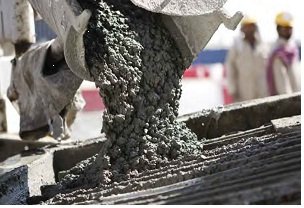
FAIRCRETE RMW is unique liquid waterproofing additive for concrete. It consists of a water based suspension of inorganic waterproofing agents in a solution of various polymers and is added to the concrete during the batching process or in a ready-mix truck with full mixing capabilities. In addition to its water proofing characteristics FAIRCRETE RMW also significantly increases the compressive strength and freeze-thaw resistance of concrete and acts as a super plasticizer.

USES
FAIRCRETE RMW is used to minimize permeability and porosity of concrete and cement sand mortar. Useful product for water retaining structures like terrace, chajjas, water tanks, parapets, bathroom, toilets and industrial structures like reservoirs, cooling tower etc.,

APPLICATION

Plaster : FAIRCRETE RMW is ideal for use with all sand and cement mortars where it is required to reduce permeability to a minimum.

Concrete : FAIRCRETE RMW is recommended for all general concrete work where the risk of porosity and permeability must be minimised. Eg. basements, bund walls, tanks, balcony, floor and roof slabs.
The required quantity of FAIRCRETE RMW is measured and poured with the regular pouring of water in case of conventional concreting. Separate dispensing system is required for RMC plants.
FAIRCRETE RMW water mixture shall be added to the concrete or mortar and mixed thoroughly. Mixing shall be continued and further water shall be added until the required workability is obtained. The total amount of water added per mix in the initial batches shall be maintained for the remaining batches.

PACKING & DOSAGE
FAIRCRETE RMW can be added in 150-200ml per bag of cement. Optimum dosage is 150ml/50 kg. cement.
FAIRCRETE RMW is supplied in 150ml, 500ml, 1, 5, 10, 50, 100, 200 ltr. carboys.

ROADCRETE MACADAM

A FAST SETTING, GENERAL PURPOSE INSTANT BITUMEN BASED ROAD REPAIR MORTAR

DESCRIPTION:
ROADCRETE MACADAM is a single part bitumen based road repair mortar composed of a factory controlled fully graded hard stone material, fine aggregates, formulated bitumen contains and special additives. It is a fast curing, high strength trowel applied mortar designed for instant rapid mortar. Its
rapid set characteristics allow a fast return of the road to traffic. The product is chloride free and can be safely used in contact with reinforcing steel. This material is capable of being applied in wet condition where the temperature ranges from 5 0 C TO 500 C.

BENEFITS:

• Excellent bond to concrete substrate
• Extremely low permeability provides protection against carbon dioxide and chlorides
• Rapid repair time
• High strength
• Fast setting
• Easy to use
• Cost effective instant road repair mortar
• Open for the traffic for shortage timing
• Can be used for man hole cover
• It will not peel, crumble, dust or crack
• Permanent repair to spelled & damaged concrete
• Freeze thaw durability better than standard concrete
• Minimum labour required.

TYPICAL PROPERTIES:

ROADCRETE MACADAM is conforming to requirement of ASTM D- 1664 and ASTM D-2027 modified as follows.
Flash point 790 c mini.
Sybolt furol viscosity at 600 c 200- 500 sec
Water 0.2% maxi.
Distillate test To 2250 c: None
To 2600 c 0-15%
To 3150 c 15-75%
Residual at 3600 c 73-90%
Residue tests:
Penetration at 250 c 150 -300
Ductility at 250 c 100 cm minimum
Solubility in trichloroethylene 99 % minimum

WHERE TO USE:
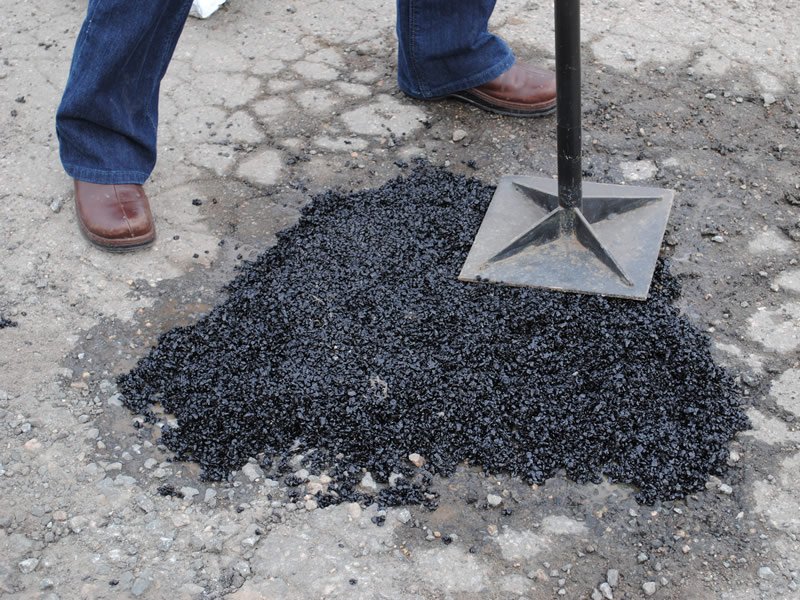
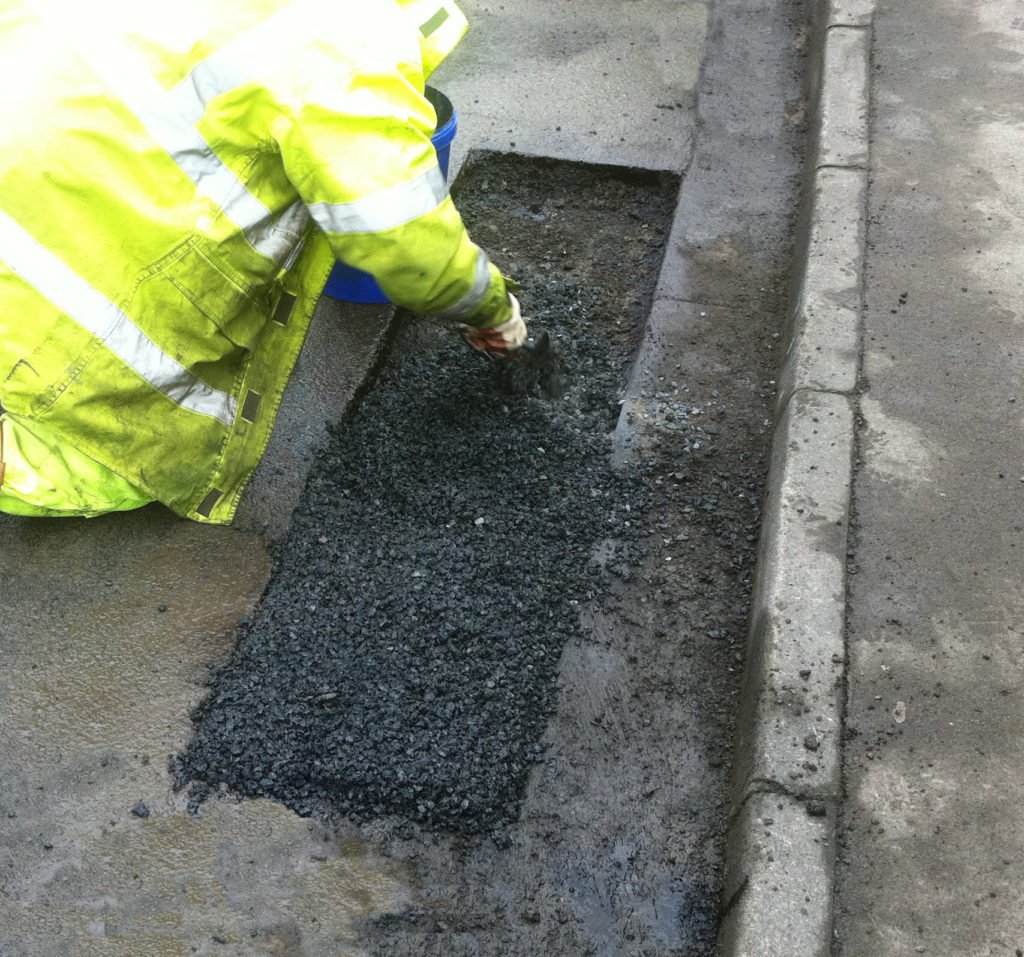
Permanent reinstatement of opening in carriageways, footways, cycles paths, private drives, reinstatement of pot holes. Remedial repairs around manholes.

LYING: Minimum thickness 15 mm.

CURING: No curing is required.

COVERAGE: The depth & width of pothole, crack, utility cut etc. will greatly influence the coverage rate achieved.

CLEAN UP: All tools should be cleaned immediately after use with a solvent base cleaner such as paint thinner or mineral spirit.

TESTING: FIVE CATEGORIES WERE DEFINED AND RATED AS FOLLOWS.

1. Bleeding: Is the flushing of the asphalt binder to the surface of the patch. IT caused by a combination of traffic loads, insufficient voids in the mix, or too much binder in the mix. Bleeding may cause poor skid resistance. – The use of open (gap) gradation and lower binder content should keep bleeding to a minimum.

2. Dishing: Is the further compaction of the patch under traffic loads. It is the result of material instability and inadequate compaction during the placement of the material. Compatibility is related to workability. Mixes with poor workability is difficult to compact. To determine the amount of dishing, a 1-m metal bar was placed across the patch parallel with the direction of travel. The amount of dishing was measured with a ruler accurate to 1.5 mm in the centre of each quadrant. The ratings were determined from the depth measurements.

3. Debonding: Occurs when the patch material loss its adhesion to the pavement at the bottom and/or sides of the pothole. When debonding occurs, the patch material can be pulled out of the hole by traffic, so the patch fails. It can be determined by disintegration i.e. the cracking cause at the edge of the patch for each quadrant. Missing patch was evaluated as a large scale loss of material. In some cases, these appeared to the cohesion failures rather than adhesion failures as all of the remaining particles were fully coated.

4. Raveling: is the loss of aggregate form the surface of the patch. Raveling is cause by stripping, poor cohesion, excessive fine aggregates and poor aggregates interlock of the patch material.

5. Pushing and shoving: is the vertical or horizontal movement of the patch material in the pothole.

The behavior of the ROADCRETE MACADAM in the above testing is very good.

WORKABILITY TEST:

The workability of the mixture was examined using the pennsylania transportation institute/ strategic highway research program (PTI / SHRP). For the PTI test, the sample is loosely placed in a 102 mm cubical box with a 10 mm hole centered on one side. A soil penetrometer with a round nose adapter 10 mm in diameter is pressed through the hole into the material. The value from the penetrometer is recorded as the workability reading.

The workability of the material was evaluated after they had been stored for 6 months as a measure of their storage ability.

The ROADCRETE MACADAM results of the workability surveys are good.
The evaluated at 7 and 14 days and 1, 3, 8, 9 and 12 months after placement.

PACKING AND COVERAGE:

ROADCRETE MACADAM is supplied 25 kg packs A 25 kg pack yields 12.5 ltr of mortars sufficient for 0.75m2 @ 25 mm thick.

FAIRCOAT SCREED

TEXTURED PROTECTIVE, DECORATIVE, ANTI-CARBONATION ACRYLIC SCREED FOR EXTERIOR / INTERIOR SURFACES

Benefits
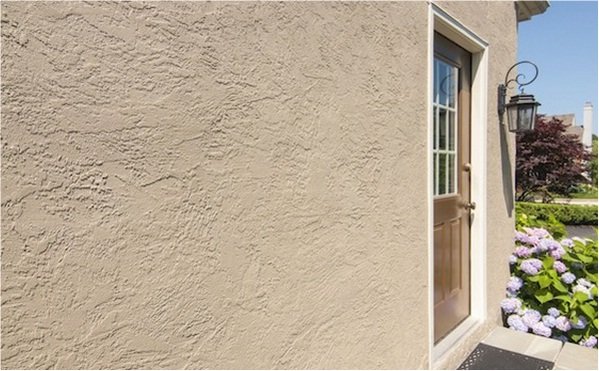
1. Gives a textured finish
2. Anti-carbonation properties
3. Good weathering properties
4. Excellent bond.
5. Forms tough acrylic plaster
6. Allows substrate to breathe
7. Choice of colours
8. Single pack, Trowel applied
9. Non toxic/Non flammable
10. Excellent waterproof coating

Description

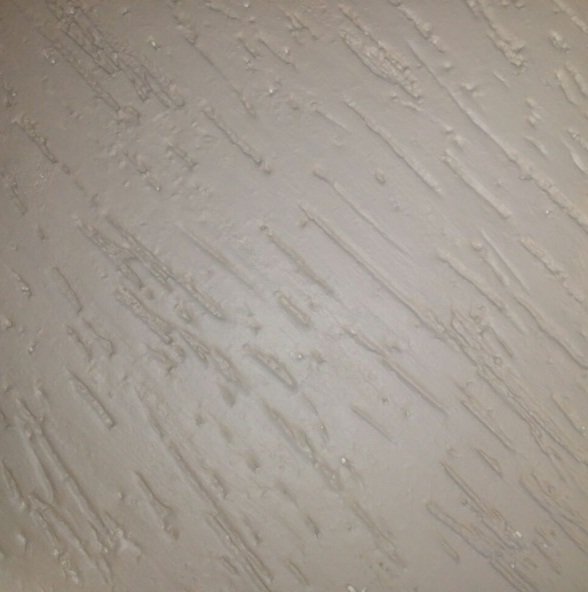
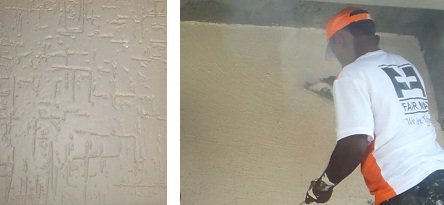
FAIRCOAT SCREED is ready to use acrylic based screed containing special polymers and fillers. It is a textured protective, decorative anti-carbonation screed for interior and exterior surfaces with exceptional weathering characteristics.

Recommended Uses

FAIRCOAT SCREED is used to provide a textured decorative durable coating for concrete and masonry surfaces. One coat application is recommended with a thickness of 1.5 to 2 mm.

Application Instructions

Surface Preparation :
Substrates must be clean, sound and free from dust and loose particles. All holes and cracks must be filled with a suitable filler. All traces of oil, grease or other contaminations must be removed. The new concrete surfaces must be atleast 14 days old before coating. If in doubt, allow full curing to take place for 28 days before application of FAIRCOAT SCREED.

Priming :
On old or porous surfaces, ensure that the substrate is sound and free from any loose particles. Apply FAIRCRETE SBL, apply FAIRCOAT SCREED on the primed surface.

Application :
Stir the material in the container thoroughly and spread evenly with trowel. Avoid application during rainy weather. The surface texture and porosity must be taken into account while estimating quantities.

Cleaning :
Tools should be cleaned immediately after use with water.

WATERGUARD LIQUID MEMBRANE (WHITE)

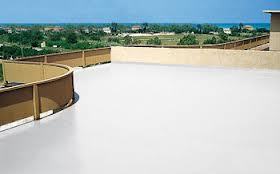
LIQUID APPLIED SINGLE COMPONENT WHITE COLOR ELASTOMERIC WATERPROOFING MEMBRANE

BENEFITS

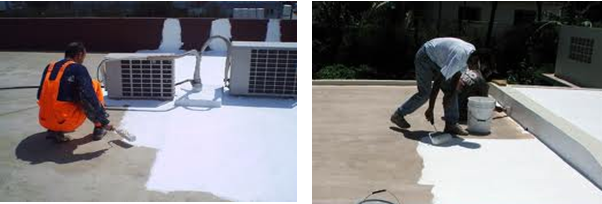
• Liquid Application, easy to apply
• White Color Membrane.
• High build properties ensures rapid application.
• High elasticity, ensuring a permanently flexible barrier over a wide range of temperatures.
• Thermal Stability.
• Screeding can be done easily over applied membrane after complete curing.
• Suitable for Exterior application e.g. Terrace
• Good bond strength.
• For Extended Life Waterproofing, application with GRS (Glass Reinforcement Sheet) is recommended.
• Excellent adhesion.
• Good Crack bridging property.
• Can be applied to range of substrates.
• Outstanding resistance to brittlement and oxidation.

DESCRIPTION
WATERGUARD LIQUID MEMBRANE (WHITE) is a single component White colored is a highly elastic tough waterproofing system based on special co-polymers & fillers. WATERGUARD LIQUID MEMBRANE (WHITE) is highly resistant to aggressive soils and soluble salts providing an effective continuous barrier and protection against water borne damage.
WATERGUARD LIQUID MEMBRANE (WHITE) is ideally suited as vapor/salt barrier to building facades behind granite, marble, stone cladding, and curtain wall elements.

RECOMMENDED USES
• Useful as protective coating on concrete and brick foundations, retaining walls, timber etc.
• Provides a sandwich membrane in new construction and surface treatment on existing slabs.
• Provides a key for plaster on difficult surfaces.
• For waterproofing and protection of structure, concrete, columns and beams.
• Used for the external insulation of foundations, underground constructions, basements. etc.
• Used for insulating water leakages in closed damp environments such as bathrooms, kitchens, toilets, etc.
• Service life can be further extended by using GRS (Glass Reinforcement Sheet) in application.
• WATERGUARD LIQUID MEMBRANE (WHITE) is particularly suitable for a wide range of applications including wet
areas, foundations, basements, terraces, retaining walls, bridge abutments, planters, inverted roofs and
remedial repairs to felt, asphalt, concrete, fibreous cement or other roof structures when protected from
exposure to direct.

ADVANTAGES

No especially skilled person required for its application. It provides a seamless insulation layer. As a water-based material it is environment friendly. Because it contains water, it enables good adhesion even when the surface is moist. It provides permanent elasticity. It is ready to use. Cold applied material, it does not require heating or thinning. It can normally be applied by brush. Very much useful for Waterproofing purpose.

APPLICATION INSTRUCTIONS

SURFACE PREPARATION : All substrates must be sound, clean,dry, smooth and free from protrusions, voids, honey-comb, sand high spots. Presence of curing agents, paint and oil will impair adhesion.
Moss and lichen must be removed and area treated with proprietary fungicidal wash to kill spores and inhibit further growth. Following treatment wash area thoroughly with Clean water and allow drying. Fillets must be provided at corners or sharp angles using 4:1 sand and cement mortar modified with a good quality bonding agent FAIRCRETESB(L).

PRIMING : Priming is not normally required on good quality, well prepared substrates.

APPLICATION : WATERGUARD LIQUID MEMBRANE (WHITE) should be applied by brush to obtain a continuous unbroken film. Four coats are required to achieve a better performance. Each coat should be applied after proper drying of previous coat. For application with GRS (Glass Reinforcement Sheet), first of all apply one coat of WATERGUARD LIQUID MEMBRANE (WHITE) then after put GRS (Glass Reinforcement Sheet) on applied material & sheet should be spread when first coat is Wet. After spreading GRS (Glass Reinforcement Sheet) roll the Paint roller over it to ensure that sheet is bonded with applied material & no air pocket has been left in between contact of applied material & GRS (Glass Reinforcement Sheet). After that apply remaining subsequent coats of WATERGUARD LIQUID MEMBRANE (WHITE) over it. WATERGUARD LIQUID MEMBRANE (WHITE) must be protected from mechanical damage during subsequent construction or backfilling works. Any damage may be repaired by spot application. If a water flood test is to be run, the membrane should cure for a minimum of 10 days. Whilst WATERGUARD LIQUID MEMBRANE (WHITE) is resistant to frost, adhesion will be impaired if applied to frosted substrates. Application should be avoided if substrate temperatures are below 5ºC or rain is imminent.
On Exterior application, applied material may become Bone White after an instant of period but this will not affect or alter the performance of WATERGUARD LIQUID MEMBRANE (WHITE).

Cleaning : Application equipment should be thoroughly cleaned after use with Water. Spillages should be absorbed with sand, vermiculite or similar and be disposed of in accordance with local regulations.

PACKING & COVERAGE

WATERGUARD LIQUID MEMBRANE (WHITE) is supplied in 1kg, 5 kg, 10 kg & 20 kg pails. It has coverage of around 1.1 kg/m²@1 mm thickness.

Coverage rate will vary with substrate condition and profile

For more details, Contact at Ph.: +91-265-2331193, WhatsApp : +91 7574834603 Toll Free: 1800 12345 34

Visit www.fairmate.com E-mail: enquiry@fairmate.net

FAIRMATE CRYSTALLINE WATERPROOFING SYSTEM

Although crystalline waterproofing technology has been around for more than 50 years, it is still considered “state-of-the-art” and has only recently been embraced by the construction industry as a superior replacement for conventional membranes. Used in virtually every country around the world, integral crystalline waterproofing has been repeatedly and successfully tested.

Crystalline waterproofing systems rely on a revolutionary crystalline technology that turns porous concrete into an impermeable barrier. The result is a structure with reduced cracking, self-sealing and waterproofing abilities which provides a powerful defence against water damage and corrosion of reinforcing steel.
Whether it is new construction, upgrading an existing structure or repairing cracks, this technology will help you build quality, reliability and cost-effectiveness into the concrete.

Crystalline Waterproofing Advantages

√ Replaces unreliable exterior membrane systems
√ Penetrates deep into concrete—many inches over time
√ Self-seals hairline cracks—minimum .5 mm (.02 in.)
√ Reactivates in the presence of moisture—even years later
√ Effective against hydrostatic pressure—up to 140 m (460 ft) of head pressure
√ Waterproofs from any direction (i.e. positive or negative side)
√ Impervious to physical damage and deterioration
√ Easy to apply and reduces potential for human error
How Does It Work?

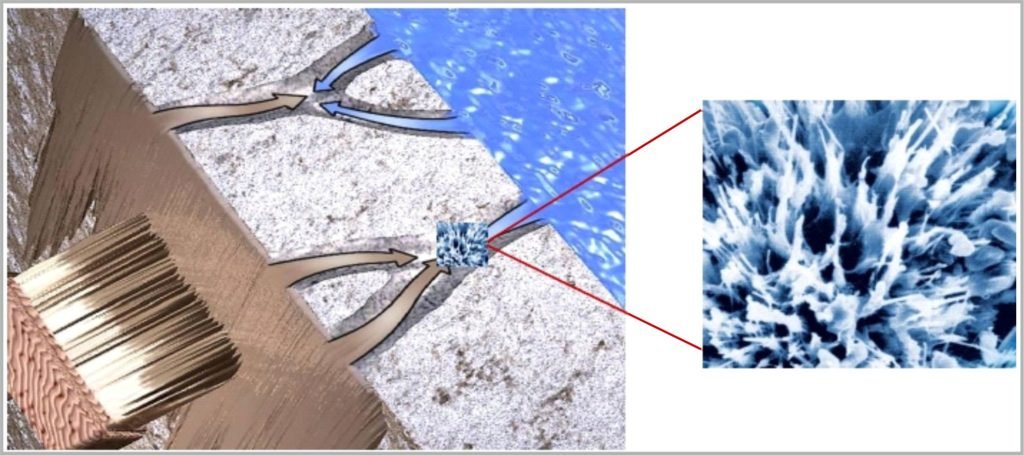
Unlike old-fashioned external membranes, which rely on an additional hurdle to shield the concrete from moisture, crystalline waterproofing product actually transforms the concrete into a water-resistant barrier. It becomes an integral part of the concrete matrix when applied to existing concrete or added to the mix at time of batching. When combined with water and concrete, the product reacts with un-hydrated cement particles to form millions of needle-like crystals. Over a period of weeks and months, these crystals grow, filling the naturally occurring pores and voids in concrete, and permanently blocking the pathways for water and waterborne contaminants.
Later, if cracks form due to settling or shrinkage, incoming water triggers the crystallization process and additional crystals begin to grow. The crystals fill the cracks and ensure that the structure’s waterproofing barrier is maintained and protected. In other words, the product has the unique ability – even years later – to self-seal hair-line cracks before they turn into costly cracks in your budget.

How are the Products applied?

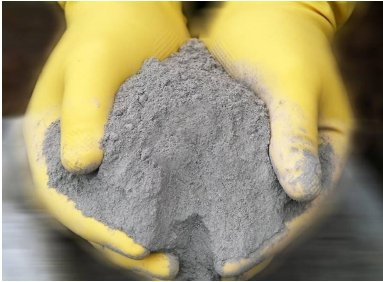
Crystalline waterproofing products are supplied as a dry powder comprised of Portland cement, silica sand and special chemicals. For new construction it can be added to the concrete mixture at the plant or on-site; applied as a dry-shake and towelled into fresh concrete surfaces; or brush-applied in slurry form to existing concrete. In addition, the products can be used to repair concrete cracks and waterproof construction joints in grout (dry pack) form.

Where Is It Used?

Crystalline waterproofing products have proven their versatility in hundreds of projects across the globe. They have been incorporated in high-rise office towers, commercial buildings, parking structures, elevator pits, subway tunnels, and mountain pipelines. They have demonstrated their reliability in protecting water supply in reservoirs and treatment tanks, recreational facilities such as pools and spas and the supporting structures of bridges and dams. These products can provide permanent waterproofing in a wide range of applications and environmental conditions.

Crystalline Waterproofing will reduce cost!

Cost savings – materials
Savings can be realized immediately through the elimination of strengthening agents, water reducers, plasticiser, curing agents, air entrainers, set retarders and shrinkage compensators. One of the largest immediate savings is the elimination of external waterproofing membranes which require both the purchase of waterproofing membrane and labour costs.

Cost savings – Labour
The ability to increase pumping, pouring, finishing and cleaning efficiency through increased flow ability and ease of use will also provide immediate labour cost savings. This technology dramatically increases productivity by reducing the labour demands and increasing the speed of the construction.

Cost savings – Job
A few simple calculations can be utilized to determine the dramatic savings that can be realized through the elimination of additives and externally applied water proofing membranes. The simple use of one additive can actually increase productivity while reducing costs.

Cost savings – Repair
The simplicity in using crystalline waterproofing products also eliminates errors due to incompetence and neglect as it is applied directly to the ready mix truck or at the batching plant. When using these products with a ready mix truck, the required amount of is added and allowed to mix for 10 minutes. The concrete is then ready for pumping and placing. The ease of use will eliminate the inconvenient and costly necessity of repairing somebody’s mistake.

Cost savings – Long Term
The long term cost savings are extremely impressive. The ability of crystalline waterproofing products to strengthen a concrete structure, to permanently waterproof and to protect reinforcing steel from corrosion and pollution increases the life expectancy of concrete structures. This will reduce the need for costly repairs and restoration in the future. It is not difficult to understand the savings advantage that can be achieved in the long run through the simple addition of crystalline products to concrete. The savings include labour, equipment, materials, financing, and the opportunity costs involved when a repair, restoration or rebuilding of a structure is required.

Integral crystalline concrete waterproofing admixture – FAIRCRETE RMW CRYSTALLINE

This product eliminates the need for conventional external waterproofing membranes. It saves time, money and hassle at the construction site over the lifetime of the concrete. The crystalline admixture is available in pulpable bags for easy addition to the concrete mixer. It won the ‘Most Innovative Product’ award from the World of Concrete tradeshow. In addition, it is the first concrete admixture to be certified by the International Code Council – Evaluation Service (ICC-ES) as a Chemical Admixture used in Concrete (AC198). This chemical admixture is used for the treatment of concrete and concrete products to protect against water intrusion, leakage, cracking, chemical attack, and corrosion of reinforcing steel.

Specially designed chemical admixtures are available for waterproofing cementitious mortar. It contains a unique blend of chemicals that react with the cementitious materials in the mortar to form hydration crystals, blocking water intrusion.

Liquid, membrane-forming compounds are also available for curing concrete. The liquid helps to prevent the rapid evaporation of moisture from fresh concrete to allow more complete cement hydration and to dramatically reduce the occurrence of drying shrinkage cracks. It is water-based and is a suitable replacement for wet curing in conformance with ACI 308 guidelines.

Surface-Applied Concrete Waterproofing Products – WATERGUARD CRYSTALLINE

Recently built structures and heritage buildings need water protection too! Whether you’re waterproofing a new structure or repairing leaks, concrete waterproofing treatments allow you to turn existing concrete into a waterproof barrier reliably and cost-effectively.

Repair & Maintenance Systems – WATERGUARD T CRYSTALLINE

No matter how carefully you build and maintain your concrete structure, it’s not a matter of if cracks will occur, but when. At best, concrete cracks are an unattractive nuisance. At worst, they lead to leaks that can damage the interior of the building, corrode steel reinforcements, and ultimately shorten the life of the concrete structure.
Unlike other systems, the repair and maintenance products that are available, protects from any direction. Even against high water pressure. Because they can be applied to either side of the concrete, there are no limits when it comes to repairing or waterproofing hard or impossible to reach areas. These products can be put to work wherever the cracks are—without expensive, time consuming perimeter digging.

How does Crystalline Waterproofing Technology work?

This technology is an integral crystalline concrete waterproofing system that was developed over 30 years ago. When added or applied to concrete, crystalline chemicals cause long, narrow crystals to form. The crystals penetrate through the concrete and fill the pores and hairline cracks. The crystals continue to react with incoming water to self-seal cracks that inevitably develop in concrete over time. This technology protects concrete structures against water and contaminants that can weaken or destroy concrete and corrode steel reinforcements.

Where is it used (types of jobs)?

Crystalline waterproofing systems can benefit any concrete structure at risk of water penetration. Its self-sealing ability and resistance to high water pressure makes it ideally suited for below-grade foundations, parking lots, elevator pits, water containment and aquatic facilities, bridges, dams, tunnels, and pipelines. Integrated – Crystalline waterproofing penetrates into the concrete. It will not crack, peel, tear or wear-away.

 Continually self-seals – Crystals within the concrete reactivate repeatedly over time to reseal cracks and prevent water penetration.

 Environmental – The products are non-toxic, non-flammable and odorless. This allows the concrete to be recycled. Traditional membrane systems are petroleum-based. They use adhesives with highly volatile organic compounds. The vapor from these compounds can cause respiratory problems and contribute to “sick building syndrome”. Oil can also leach out and contaminate ground water.

 Maximizes space – No additional space outside the structure is required for membrane application. This allows for a larger structural footprint and building right to the property line.

 Saves time – The products can be applied to green concrete or added to the ready-mix truck. There is no need to wait for the membrane application, so backfilling can begin right away.

 Tropical climates – Membrane systems become brittle and deteriorate when exposed to prolonged heat. Crystalline systems reduce premature moisture loss in hot or tropical climates. It creates a more durable structure and reduces shrinkage and cracking. It is unaffected by climate and remains effective for the life of the structure.

How is our crystalline technology different from other crystalline technologies?

Many products claim to have permanent waterproofing abilities. Most are only damp proofers and have little penetrating ability. These products contain stearates or sodium silicates. They waterproof by filling initial surface pores of concrete only. Therefore, they work well initially, but continually deteriorate over time.
Our products are free of stearates, sodium silicates and chlorides. It contains a proprietary blend of chemicals that cause hydration crystals to grow throughout the capillaries and pores of concrete as the material comes in contact with moisture. The crystals continue to react in the presence of later, making our products more effective with time.
For more details, Contact at Ph.: +91-265-2331193, WhatsApp : +91 7574834603 Toll Free: 1800 12345 34

Visit www.fairmate.com E-mail: enquiry@fairmate.net

WATERREPELL S

UNIVERSAL SILICON BASED WATER REPELLENT

BENIFITS

• Easily applied water repellent treatment giving a self-cleaning, hydrophobic surface to masonry, concrete
and asbestos sheeting.
• Excellent water repellent
• Excellent resistant to UV light.
• Minimizes efflorescence and prevents growth of fungus.
• Economical and very easy to apply
• Prevents entry of moisture into the walls, but allows the surface to breathe.
• Colorless hence maintains natural color of walls.

DESCRIPTION

WATERREPELL S is a ready to use, silane-siloxane based repellent which penetrates in concrete or cementitious substrates pores, providing an effective water repellent protective coating. Its UV resistant properties make the film durable for outdoor use. The use of silicone retards or prevents changes in the surface appearance by resisting the deterioration effects occurred due to atmospheric attack. Due to its excellent water repellent properties, dirt and other atmospheric impurities are washed off by rain and it’s clean appearance is maintained for a longer period. Also, WATERREPELL S prolongs the clear appearance of buildings and minimizes efflorescence.

USES

WATERREPELL S is suitable for external application to exterior walls of brick or concrete blocks, cement renderings, asbestos cement, concrete and all types of stone, including limestone. Also used as an injection damp coarse fluid and provides a durable barrier to water penetration of porous surfaces.

WATERREPELL S GIVES PROTECTION AGAINST:

• water Intrusion
• Salt Intrusion
• Weathering
• Spalling, Staining
• Efflorescence
• Fungi, Freeze-Thaw Scaling

WATERREPELL S CAN BE USED ON

• Architectural Concrete
• Structural Concrete
• Commercial Parking Garages
• Concrete Masonry Units
• Portland Cement
• Brick Masonry (non-glazed)
• Flagstones & Pavers (non-glazed)
• Limestone
• Sandstone

It is non-glossy and will not alter the color or surface texture of the natural substrate. This architectural grade sealer is 100% water vapor permeable and, unlike solvent-based products, is not hazardous. Water repellent S prevents moisture from seeping into concrete and also keeps damaging ice melting compounds from penetrating into concrete, making it especially ideal for use in parking garages where de-icing chemicals are required in order to protect from extreme moisture.

APPLICATION

Surface Preparation: All surfaces to be treated must be sound, clean and dry. Any defects and cracks, other than hair line cracks, should be made good. Dirty surfaces should be thoroughly cleaned and organisms such as algae or lichens should be removed. In no circumstances should detergents be used as they may reduce the efficiency of the treatment. The surface should be allowed to dry before the application of WATERREPELL S. WATERREPELL S should not be applied over mastics surfaces Glass, etc. should be protected against splashing during application.
Application: WATERREPELL S is supplied ready to use. Apply by brush or low pressure spray. The WATERREPELL S should be applied liberally so that it runs freely down the surface to about six inches below the point of application. When applying by spray, the pressure should be kept as low as possible to avoid excessive misting, and the nozzle held close to the surface. After application of WATERREPELL S, it dries within a few hours and becomes fully resistant to water in 24 hours. Brushes, spray equipment, etc. may be cleaned with water.

PACKING & COVERAGE

Packing: WATERREPELL S is available in 1, 5, 10, 50,100 liters carboys.

Coverage: 1Ltrs of WATERREPELL S will cover approx. 4 to 5 m2 of surface depending upon porosity and surface texture. Normally one coat is sufficient.

FAIRMATE MICROCRETE – INNOVATIVE FLOORING & WALL FINISHING

DESCRIPTION

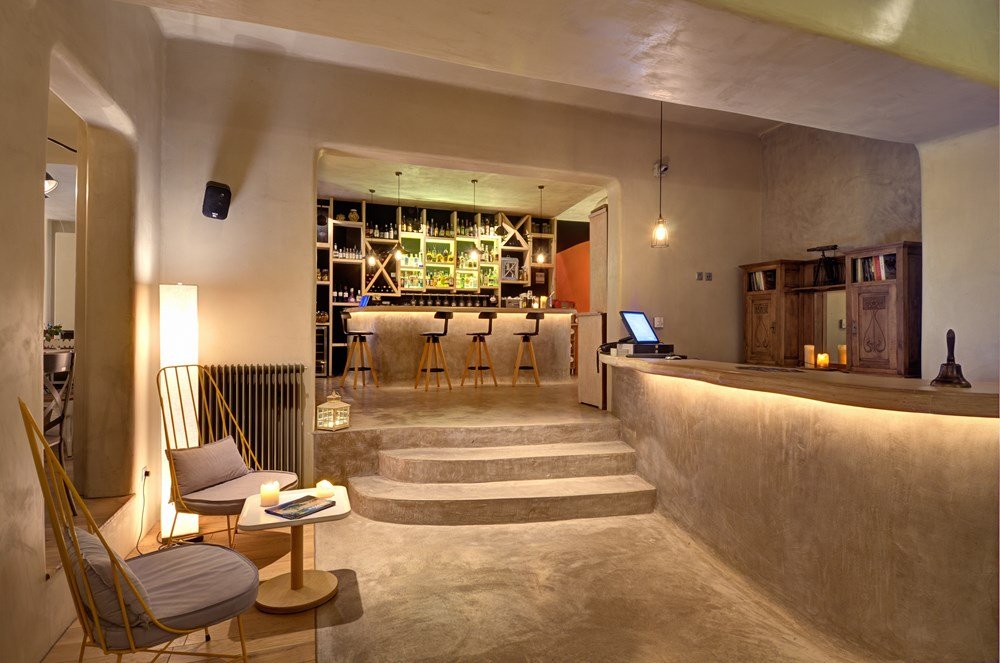
FAIRMATE MICROCRETE is a Unique new age decorative product which suitable for application on Floors, Walls & even on ceilings. The Uniqueness of this product is that it can even be applied to create uniform surfaces with minimum possible number of joints. With the increase of the renovation market this product can be applied directly on existing coverings such as Ceramic Tiles, Mosaic Floors, Wood, Metal, Dry boards & Glass. FAIRMATE MICROCRETE is the product which is available in different color combinations & patterns. The surface finished with FAIRMATE MICROCRETE provides unique architectural look whether it has been applied in Living Room, bathroom, office or kitchen, industrial floor, furniture, external façade. FAIRMATE MICROCRETE can be easily applied upon existing coverings, such as ceramic tiles without removing them, allow us to quickly and easily change the look and shape of our space with low cost and in a short period of time.

USES

FAIRMATE MICROCRETE can be applied as per below described surfaces:

• On internal floors and walls,bathrooms on cement based substrate on floors and gypsum boards on walls.
• On external floors and walls, staircases and external whirlpools.
• On Internal floors and staircases over existing ceramic tile floors.
• On Internal floors and walls over existing ceramic tiles.
• On floors, walls and staircase inside swimming pools.
• Suitable on marble and porcelain sink, office, flower. pot, office, kitchen bench, heating panel and office
produced of cement board.

BENEFITS

• Small application Height.
• High Tensile & compressive strength.
• Available in Variety of Colors & Patterns.
• Can also be applied on existing coverings such as Ceramic Tiles, Wood, Dry Board, Naval Board, Glass etc.
• Available in Variety of Varnish coat finishes.
• Ease of application.
• Excellent bonding on variety of substrates.
• Suitable for application on Floors, Walls & Ceilings.

VISIT: http://www.fairmate.com/