

Terrace Waterproofing Before Monsoon: Technical Checklist for Contractors and Homeowners
Terrace Waterproofing Before Monsoon: Technical Checklist for Contractors and Homeowners
Terrace leakage is one of the most common building problems during monsoon. In many cases, leakage does not start because of heavy rain alone. It starts because small cracks, weak joints, blocked drains or damaged coatings were ignored before the rainy season.
Before monsoon, every terrace should be inspected carefully. A simple visual check can help identify leakage risks before they turn into major seepage, dampness and repair complaints.
For contractors, applicators, builders and homeowners, terrace waterproofing should be planned as a technical process. The focus should be on inspection, surface preparation, crack treatment, joint detailing, slope correction and correct waterproofing product selection.
Why Terrace Waterproofing Should Be Done Before Monsoon
During monsoon, terrace surfaces face continuous rainwater exposure. If water enters through cracks, joints or weak coating areas, it may travel below the surface and appear as ceiling dampness, wall patches, paint peeling or seepage marks.
Once active leakage starts, repair work becomes more difficult because the surface may remain wet and unsuitable for coating. That is why waterproofing inspection and repair should ideally be done before heavy rainfall begins.
Pre-monsoon terrace waterproofing helps reduce:
- Roof leakage complaints
- Damp ceiling patches
- Wall seepage
- Paint peeling
- Plaster damage
- Water stagnation issues
- Repeat repair cost
- Customer complaints after handover
Step 1: Check Terrace Surface Cracks
Cracks are one of the first signs of leakage risk. Even small hairline cracks can allow water to enter the surface during repeated rainfall.
Check the terrace for:
- Hairline cracks
- Open cracks
- Shrinkage cracks
- Cracks near parapet walls
- Cracks around pipe outlets
- Cracks near drain areas
- Cracks in old waterproofing coating
Before applying any waterproofing product, cracks should be treated properly. Applying coating directly over open cracks may not solve the problem because water can continue moving below the membrane.
Step 2: Inspect Parapet Wall Junctions
The junction between terrace floor and parapet wall is a critical leakage point. Many terrace leakage problems start from this corner because rainwater collects near the wall and enters through weak joint areas.
Check whether the wall-floor junction has:
- Open gaps
- Poor corner treatment
- Cracks along the parapet line
- Damaged old coating
- Water stagnation near the wall
- Weak plaster or hollow patches
Proper corner treatment is necessary before waterproofing coating application. In many cases, joint reinforcement or angle treatment may be required depending on site condition.
Step 3: Check Pipe Outlets and Drain Areas
Pipe outlets, drain mouths and rainwater pipes are common weak points in terrace waterproofing. If these areas are not sealed properly, water can enter around the pipe sleeve and travel into the slab or wall.
Before monsoon, check:
- Drain outlet condition
- Pipe penetration gaps
- Loose sealant around pipe areas
- Water stagnation near drain points
- Blocked drainage lines
- Cracks around outlet zones
Even if the main terrace coating is good, leakage can continue if pipe outlet detailing is poor.
Step 4: Check Terrace Slope and Water Stagnation
Waterproofing coating cannot fully compensate for poor slope. If rainwater remains stagnant for long periods, the coating system faces higher stress and leakage risk increases.
Check the terrace after water testing or cleaning. Identify areas where water remains standing.
Common slope problems include:
- Reverse slope
- Low spots on roof slab
- Water ponding near parapet walls
- Drain outlet placed at wrong level
- Blocked or insufficient drainage
- Uneven surface due to old repairs
Correcting slope and drainage is an important part of terrace waterproofing planning.
Step 5: Inspect Old Waterproofing Coating
Many terraces already have some form of old waterproofing layer. Before applying a new coating, check whether the old layer is sound or failing.
Look for:
- Peeling coating
- Blisters
- Cracks in coating
- Powdery surface
- Loose patches
- Exposed concrete
- Water trapped below coating
- Previous repair marks
A new waterproofing membrane should not be applied over weak old coating without proper preparation. Loose or damaged material should be removed before new product application.
Step 6: Prepare the Surface Properly
Surface preparation is one of the most important steps in waterproofing. Even a good product may fail if applied over dust, oil, loose particles or weak substrate.
Before applying waterproofing:
- Clean the surface thoroughly
- Remove dust, laitance and loose particles
- Remove oil, grease or contamination
- Repair cracks and weak patches
- Treat joints and corners
- Ensure the surface is suitable for coating
- Follow product-specific surface condition requirements
Proper surface preparation improves adhesion and supports long-term coating performance.
Step 7: Select the Right WaterGuard System
Terrace waterproofing product selection depends on surface condition, exposure, cracks, slope and application requirement.
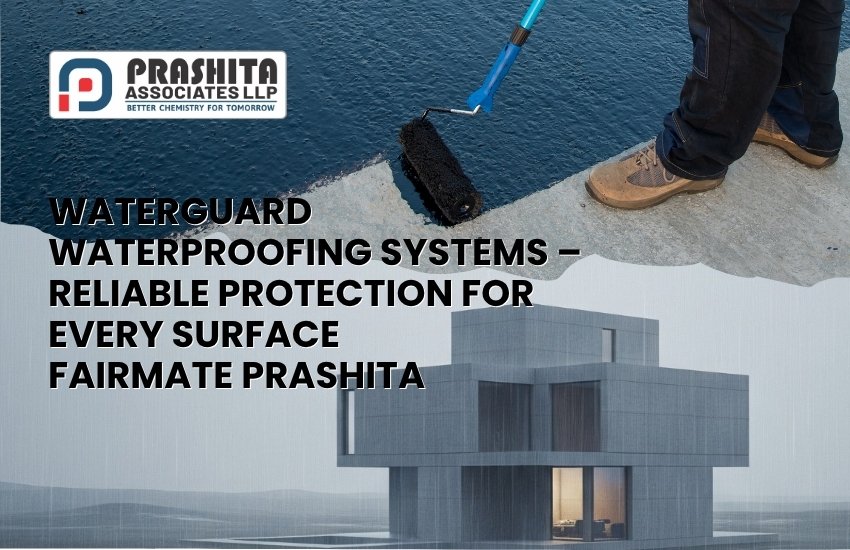
WaterGuard Liquid Membrane from Fairmate Prashita can be considered for terrace and roof slab waterproofing where a flexible liquid-applied membrane is required. It is useful for terrace protection when applied over a properly prepared surface with correct detailing and application thickness.
For more demanding waterproofing conditions, other WaterGuard systems may be considered after technical evaluation.
Fairmate Prashita’s waterproofing range includes products such as:
- WaterGuard Liquid Membrane
- WaterGuard PU Membrane
- WaterGuard A
- WaterGuard AS
- WaterGuard S
- Fairmate Nanosil
The right product should be selected based on the leakage problem and site requirement.
Step 8: Follow Correct Application Method
Waterproofing performance depends not only on product selection but also on application control.
During application, contractors should ensure:
- Correct mixing method where applicable
- Proper primer or base coat if required
- Crack and joint treatment before coating
- Uniform coating thickness
- Recommended number of coats
- Correct drying time between coats
- Protection from rain during curing
- Final inspection after application
Avoid applying waterproofing coating during active rainfall, over wet surfaces or when the surface is not ready.
Common Terrace Waterproofing Mistakes to Avoid
Avoid these common mistakes before monsoon:
- Applying coating without surface cleaning
- Ignoring cracks and joints
- Skipping pipe outlet treatment
- Applying product over weak old coating
- Using the same product for every leakage issue
- Not checking slope and drainage
- Applying insufficient coating thickness
- Not following drying time
- Ignoring technical guidance for critical areas
These mistakes often lead to repeat leakage complaints.
Final Pre-Monsoon Terrace Checklist
Before monsoon, make sure your terrace is checked for:
- Cracks
- Parapet wall junctions
- Pipe outlets
- Drainage slope
- Water stagnation
- Old coating failure
- Surface cleanliness
- Weak plaster or concrete
- Product suitability
- Correct application method
A proper waterproofing checklist helps contractors and homeowners prevent small defects from becoming major leakage problems.
Conclusion
Terrace waterproofing before monsoon is not just about applying a coating. It requires proper inspection, crack treatment, joint detailing, slope checking, surface preparation and correct WaterGuard product selection.
WaterGuard waterproofing solutions from Fairmate Prashita help contractors, builders and homeowners select suitable systems for terrace leakage, roof protection, wet areas, basements and surface protection.
Need terrace waterproofing support before monsoon?
Call Fairmate Prashita: 1800 571 8862
Visit: www.fairmateprashita.com
Fairmate Prashita LLP
Advanced construction chemical solutions for waterproofing, concrete repair, grouting, flooring, protective coatings, tile adhesives and admixtures.