
Concrete Repair Chemicals: How to Repair Cracks and Spalling
Concrete is one of the most durable construction materials, but it can still get damaged due to structural movement, water ingress, corrosion, poor workmanship, chemical exposure, carbonation, impact damage or long-term weathering. Two of the most common concrete repair problems seen on sites are cracks and spalling, raises need of Concrete Repair Chemicals.
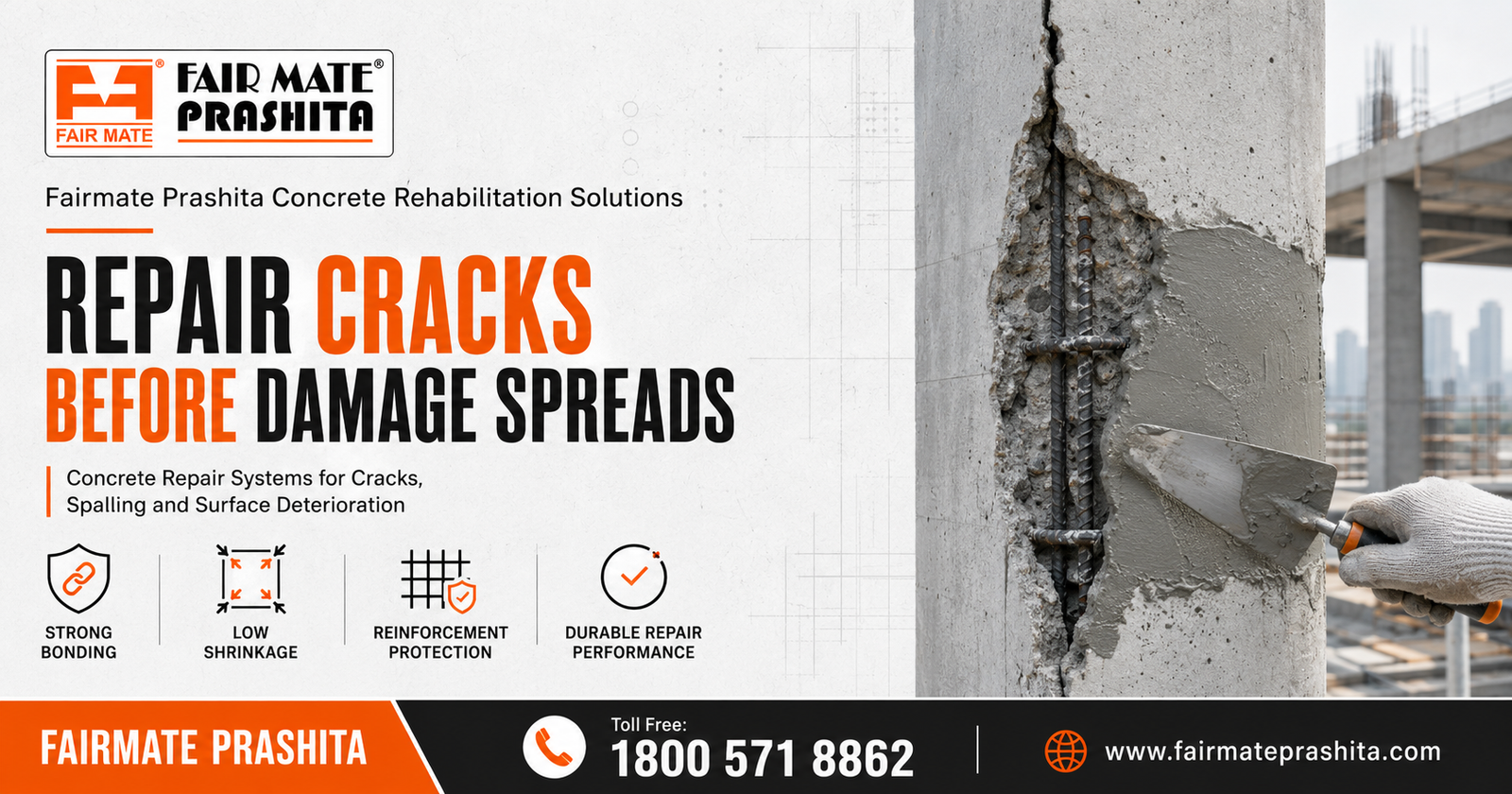
Small cracks may look minor in the beginning, but if they are ignored, they can allow moisture, chlorides and carbon dioxide to enter the concrete. Over time, this can affect reinforcement, reduce durability and increase repair costs. Spalling is another serious issue where the concrete surface breaks, flakes or comes off, often exposing steel reinforcement.
The right concrete repair chemicals help restore surface integrity, improve bonding, protect reinforcement and extend the service life of the structure. However, repair success depends on proper inspection, surface preparation, product selection and application method.
What Causes Cracks in Concrete?
Concrete cracks can happen due to many reasons. Some cracks are non-structural, while others may indicate deeper structural or durability issues. Before selecting a repair material, the cause of cracking should be understood.
Common causes of concrete cracks include:
- Drying shrinkage
- Thermal movement
- Structural loading
- Settlement
- Poor curing
- Water leakage
- Corrosion of reinforcement
- Poor concrete mix or compaction
- Construction joint movement
- Chemical or weather exposure
Not every crack needs the same repair method. A hairline crack on a plastered surface, a leakage crack on a terrace, and a structural crack in a beam or column may require different repair systems.
What Is Concrete Spalling?
Concrete spalling happens when the surface layer of concrete breaks, chips, flakes or separates from the main body of concrete. It is commonly seen on slabs, columns, beams, balconies, basements, parking areas, industrial floors and exposed concrete structures.
Spalling may occur due to:
- Corrosion of reinforcement
- Water ingress
- Carbonation
- Chloride attack
- Freeze-thaw damage in cold regions
- Impact or abrasion
- Low cover to reinforcement
- Poor quality concrete
- Poor compaction or honeycombing
- Chemical exposure
When reinforcement starts corroding, rust expands and creates internal pressure. This pressure can push the surrounding concrete outward, causing cracks and spalling. If this is not repaired correctly, the damage can spread further.
Why Concrete Repair Chemicals Are Important
Concrete repair is not only about filling a visible gap or covering damaged concrete. A good repair system should support bonding, strength, durability, protection and compatibility with the existing structure.
Concrete repair chemicals are used to:
- Fill cracks and voids
- Repair spalled concrete
- Restore damaged surfaces
- Improve bonding between old and new concrete
- Protect reinforcement from corrosion
- Reduce water ingress
- Improve surface durability
- Support long-term concrete rehabilitation
Using ordinary cement mortar for all repair work may not provide the required bonding, shrinkage control or durability. Purpose-designed concrete repair products are often needed for long-term performance.
Step-by-Step Approach to Repair Cracks and Spalling
1. Inspect the Damage
The first step is inspection. Check whether the damage is limited to the surface or connected to a deeper structural issue. Identify the type of crack, crack width, location, leakage condition, reinforcement exposure and surrounding concrete quality.
For spalling, check whether reinforcement is exposed, corroded or loose. Also inspect whether the concrete around the damaged area is sound or weak.
Important inspection points include:
- Crack width and depth
- Active or inactive crack movement
- Water seepage or leakage
- Hollow or loose concrete
- Reinforcement corrosion
- Surface contamination
- Chemical exposure
- Load-bearing condition
If the damage is structural, a qualified engineer should evaluate it before repair.
2. Remove Loose and Damaged Concrete
For spalling repair, all loose, weak and delaminated concrete must be removed. Repair should not be done over unsound concrete because it can affect bonding and durability.
The repair area should be cut or prepared properly so the repair mortar can bond with a stable substrate. Exposed reinforcement should be cleaned and treated before applying repair material.
Surface preparation may include:
- Chipping loose concrete
- Removing dust and laitance
- Cleaning rust from reinforcement
- Removing oil, grease and contaminants
- Creating a firm and clean repair edge
- Washing and drying the surface as required
Good surface preparation is one of the most important factors in repair success.
3. Treat Reinforcement if Required
If steel reinforcement is exposed or corroded, it should be cleaned properly. Rust, loose scale and contaminants must be removed. Depending on project requirement, an anti-corrosion coating or reinforcement protection system may be applied.
This step is important because untreated reinforcement corrosion can continue even after surface repair. If corrosion is active, the repair may fail early.
4. Select the Right Repair Material
Different repair conditions require different repair products. The repair material should be selected based on repair thickness, structural requirement, exposure condition, application method and required strength.
Common types of concrete repair chemicals include:
- Polymer modified repair mortar
- High strength repair mortar
- Micro concrete
- Epoxy repair mortar
- Crack filling compounds
- Injection grouts
- Bonding agents
- Anti-corrosion coatings
- Protective coatings
For small non-structural surface cracks, crack filling material may be suitable. For spalling, polymer modified repair mortar or structural repair mortar may be required. For deeper repairs or congested reinforcement areas, micro concrete may be considered.
5. Apply Bonding Agent or Primer
In many repair applications, bonding between old concrete and new repair material is critical. A suitable bonding agent or primer may be used to improve adhesion.
The bonding system should be compatible with the repair mortar and substrate condition. Application should follow the recommended method, because improper timing or poor surface condition can affect bonding.
6. Apply Repair Mortar or Repair System
After surface preparation and bonding treatment, the selected repair mortar can be applied. The material should be placed properly into the repair area without leaving voids.
For vertical and overhead repairs, the repair mortar should have suitable build-up properties. For larger repairs, layer-by-layer application may be required.
Key points during application:
- Mix the product in the correct ratio
- Avoid excess water addition
- Apply within working time
- Compact the material properly
- Maintain required repair thickness
- Finish the surface as per requirement
- Cure the repair area properly
Incorrect mixing or poor application can reduce performance.
7. Cure and Protect the Repaired Area
Curing is important for cementitious repair mortars. Proper curing helps strength development and reduces shrinkage-related problems.
After repair, the surface may also require protective coating depending on exposure condition. For example, exposed concrete surfaces, industrial structures, basements, parking areas or coastal structures may need additional protection from moisture, carbonation, chemicals or weathering.
Common Mistakes in Concrete Repair
Concrete repair failure often happens because of poor preparation or wrong product selection. Some common mistakes include:
- Filling cracks without identifying the cause
- Applying repair mortar over loose concrete
- Ignoring reinforcement corrosion
- Using ordinary cement mortar for all repairs
- Poor surface cleaning
- Adding excess water to repair mortar
- Not using bonding agent where required
- Ignoring curing
- Not protecting the repaired surface from future exposure
A repair should be planned as a system, not as a temporary patch.
How to Select Concrete Repair Chemicals
When selecting concrete repair chemicals, consider these factors:
- Type of damage: crack, spalling, honeycombing or surface erosion
- Structural or non-structural repair requirement
- Repair depth and thickness
- Exposure to water, chemicals or weather
- Reinforcement condition
- Required strength and durability
- Application area: horizontal, vertical or overhead
- Compatibility with existing concrete
- Need for protective coating after repair
Correct product selection helps improve repair life and reduces repeat maintenance.
Fairmate Prashita Concrete Repair Support
Fairmate Prashita offers concrete repair solutions for cracks, spalling, damaged concrete surfaces, repair mortars, bonding support and concrete rehabilitation applications.
Our concrete repair approach focuses on:
- Proper surface preparation
- Strong bonding
- Low shrinkage repair
- Durable repair performance
- Reinforcement protection support
- Long-term concrete rehabilitation
Fairmate Prashita supports engineers, contractors, consultants and maintenance teams with product guidance for concrete repair and protection requirements.
Conclusion
Concrete cracks and spalling should not be ignored. Even small visible damage can become a larger durability issue if moisture and aggressive agents enter the concrete. Successful repair requires proper inspection, removal of damaged concrete, reinforcement treatment, correct repair material selection, bonding support, careful application and curing.
The right concrete repair chemicals help restore damaged surfaces, improve durability and protect the structure for long-term performance.
For concrete repair system guidance, connect with Fairmate Prashita.
Explore repair systems:
Call: 1800 571 8862
Website: www.fairmateprashita.com